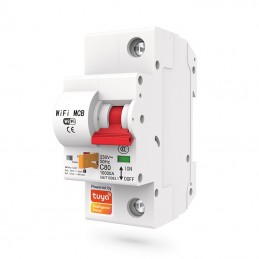
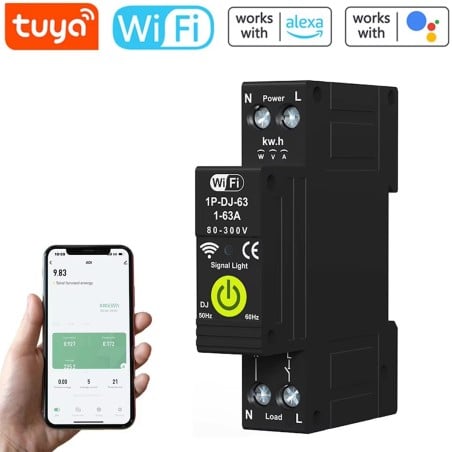
Tuya WiFi Circuit Breaker 1-63A DIN Rail with Bidirectional Consumption and Dispersion Measurement
€29.90
Tax included
No review at the moment
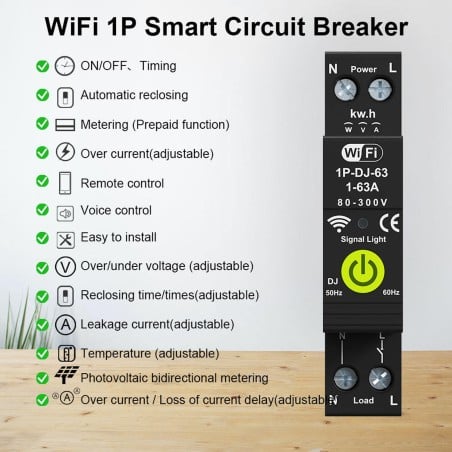
App-adjustable protection settings: set overcurrent from 1 to 63 A (in 0.1 A increments), undervoltage from 80-210 V, overvoltage from 120-300 V and temperature, each of which can be enabled or disabled.
Short-circuit protection and trip delays: trips in the event of a short circuit; use the app to set the overcurrent and leakage current protection trip delays from 1 to 15 seconds.
Leakage sensing ring included: the package includes a sensing ring connected to the circuit breaker: it detects leakage current, which you can view in the app, with protection adjustable from 10 to 99 mA.
Automatic reset: after tripping, the device recloses automatically after 10-99 seconds: use the app to select the delay and the number of retries before it remains open.
Real-time monitoring: view voltage, current, power, leakage current and temperature in the app, along with the trip count and energy consumption history by hour, day, month and year.
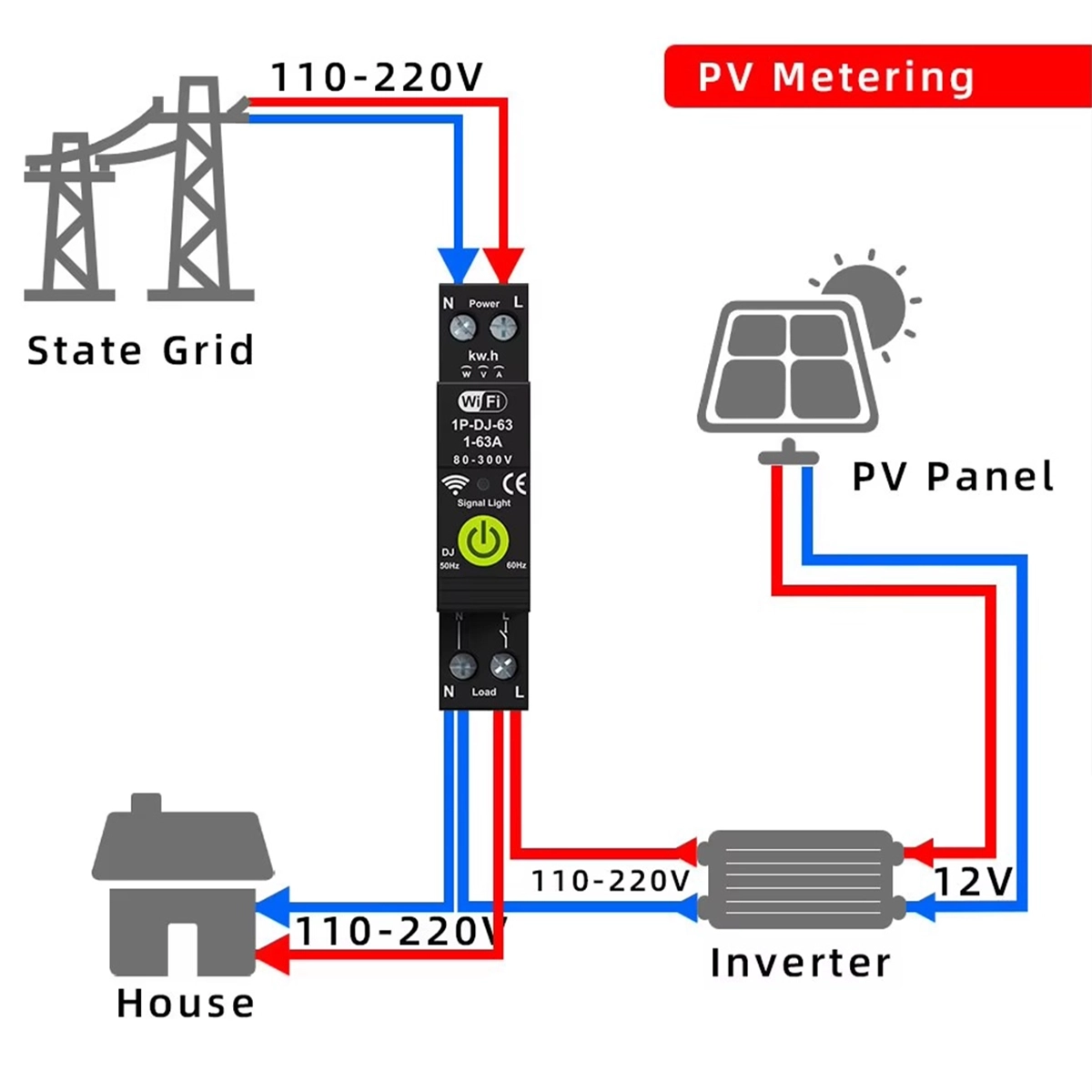
Bidirectional metering for solar PV: measures energy in both directions: from and to the grid. Connected between the meter, inverter and home, it shows how much energy you draw from and feed into the grid.
Prepaid function: top up an energy credit via the app: when the credit runs out, the circuit breaker automatically disconnects the circuit. Useful, for example, in a rental apartment.
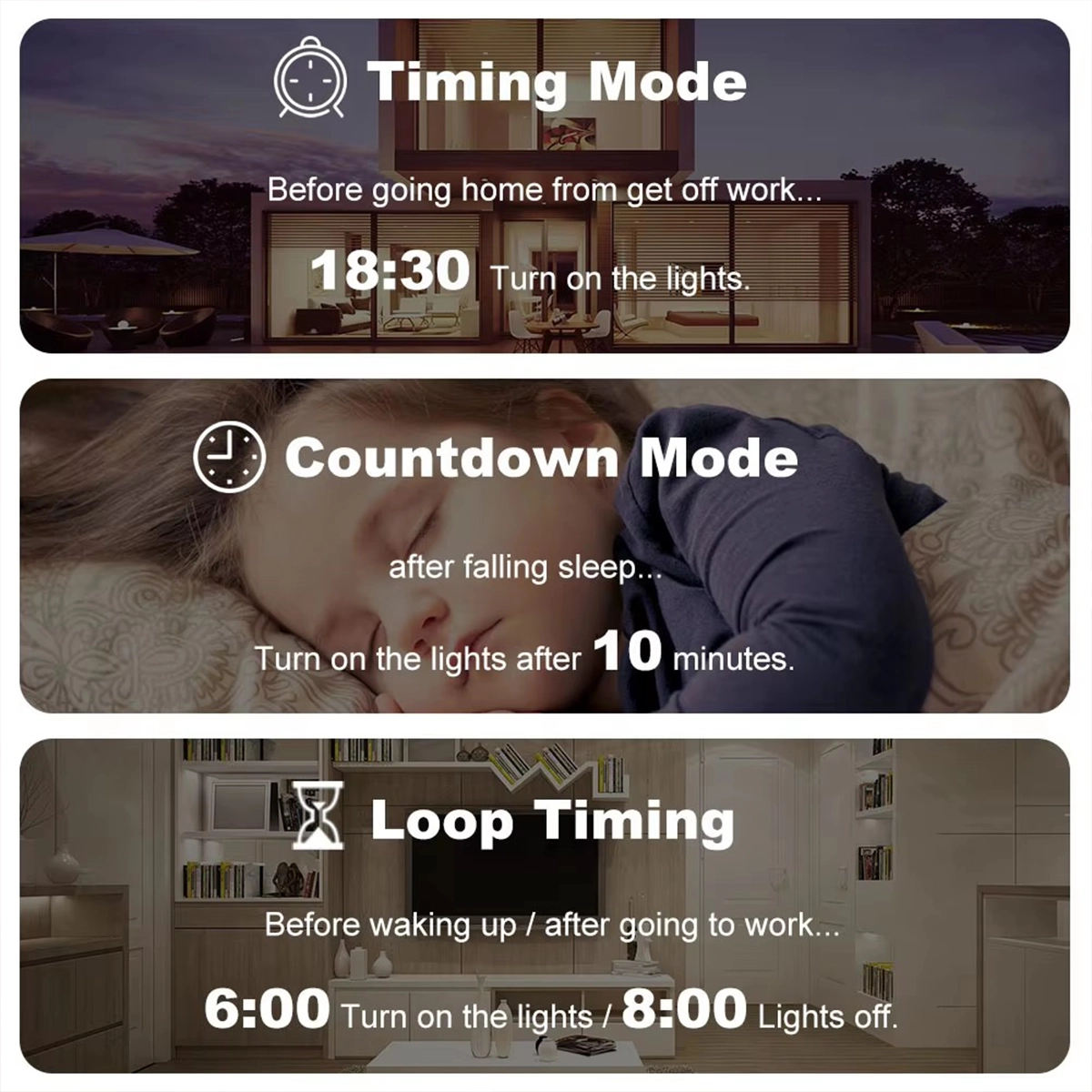
Timer and remote control: switch the circuit on and off via the Tuya Smart or Smart Life app, even when away from home, with up to 30 schedules: timed, countdown, cycle and pulse.
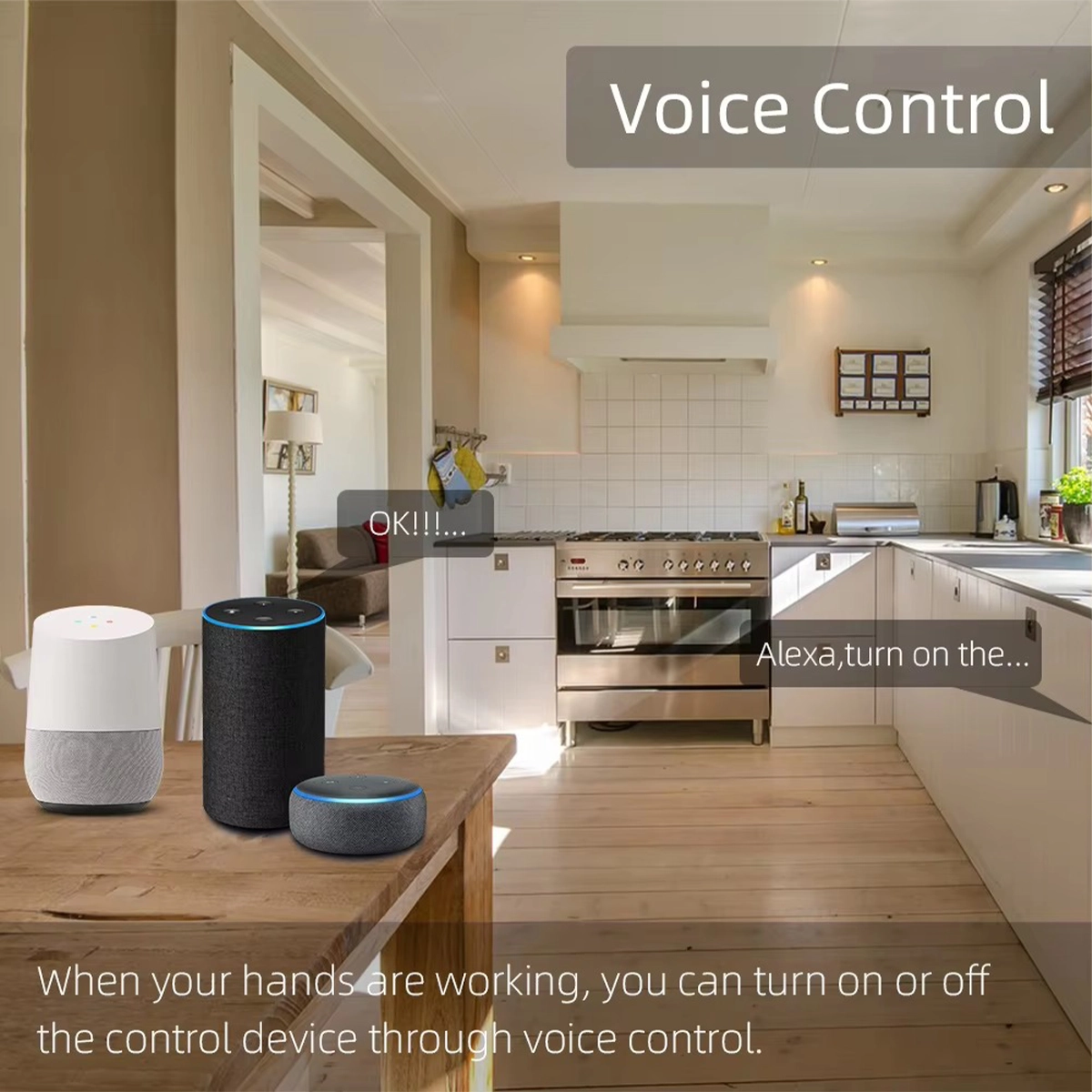
Alexa and Google Home: control the circuit by voice via Amazon Alexa and Google Home after linking your Tuya or Smart Life account.
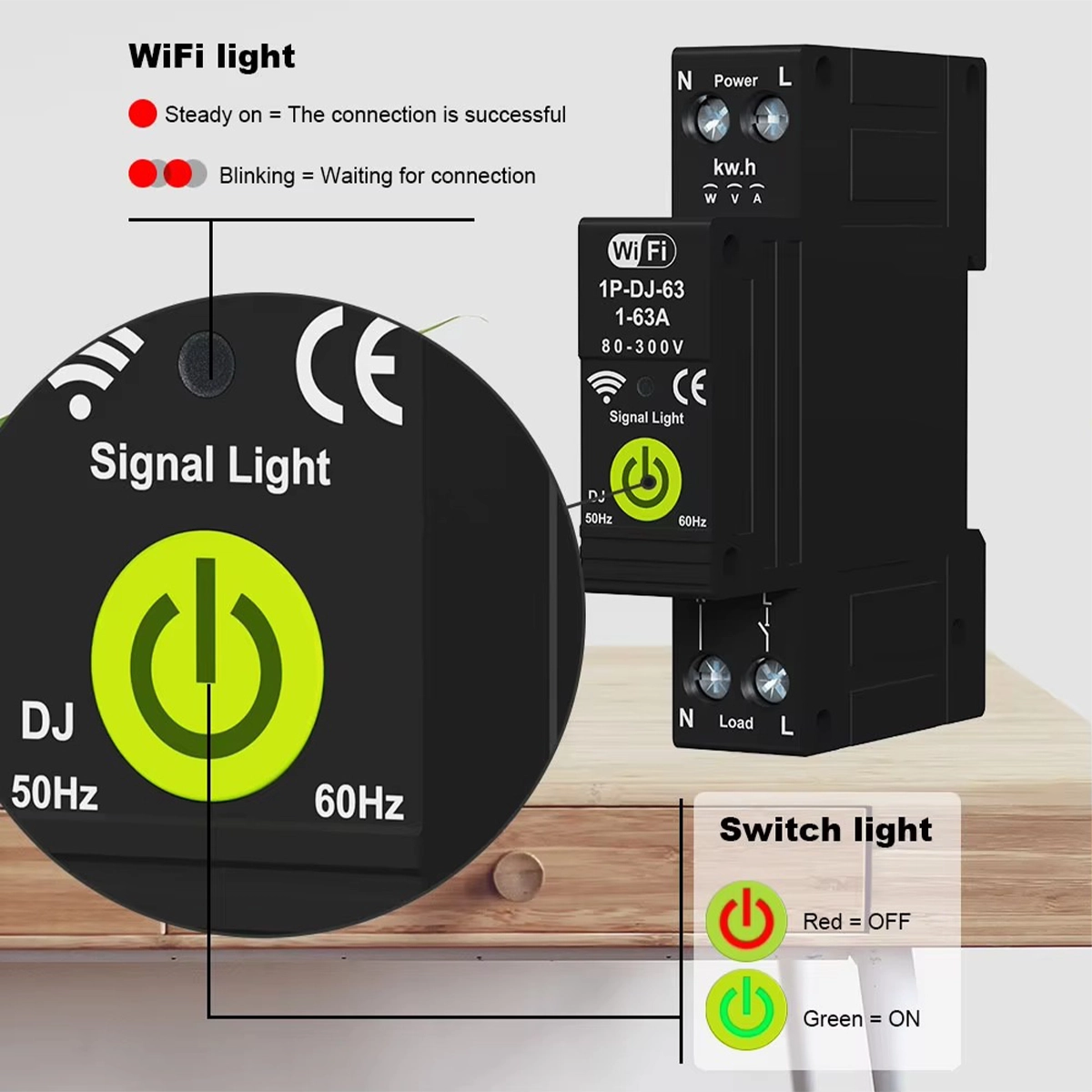
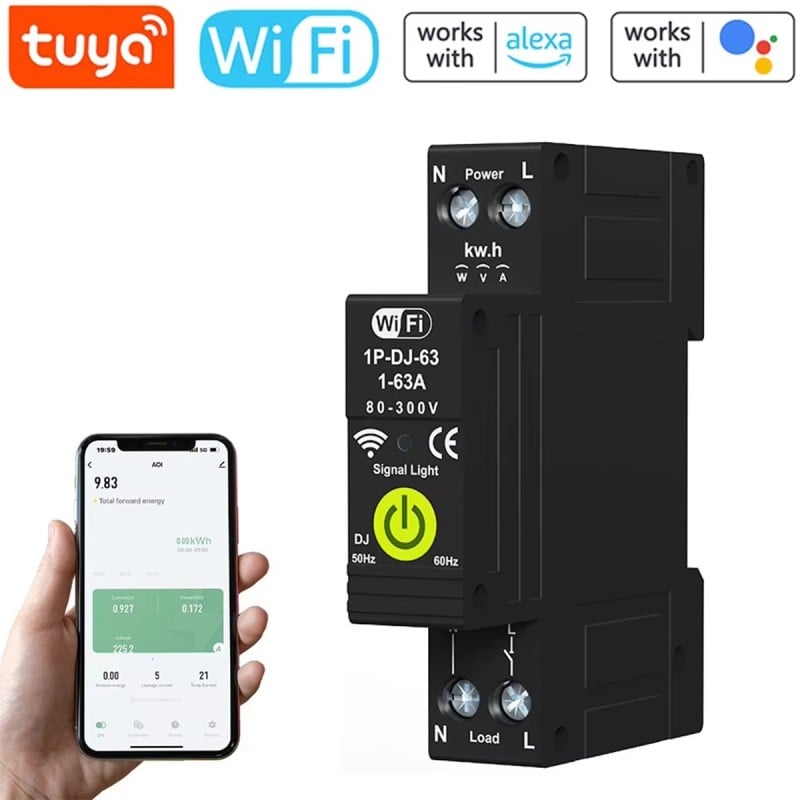
Front button and LED: the green button on the front switches the circuit on and off manually, directly at the distribution board; the “Signal Light” LED indicates the WiFi signal status.
80-300 V power supply: operates on single-phase circuits at 80 to 300 V AC, 50/60 Hz, with live and neutral inputs at the top and outputs to the load at the bottom. IP20 protection rating.
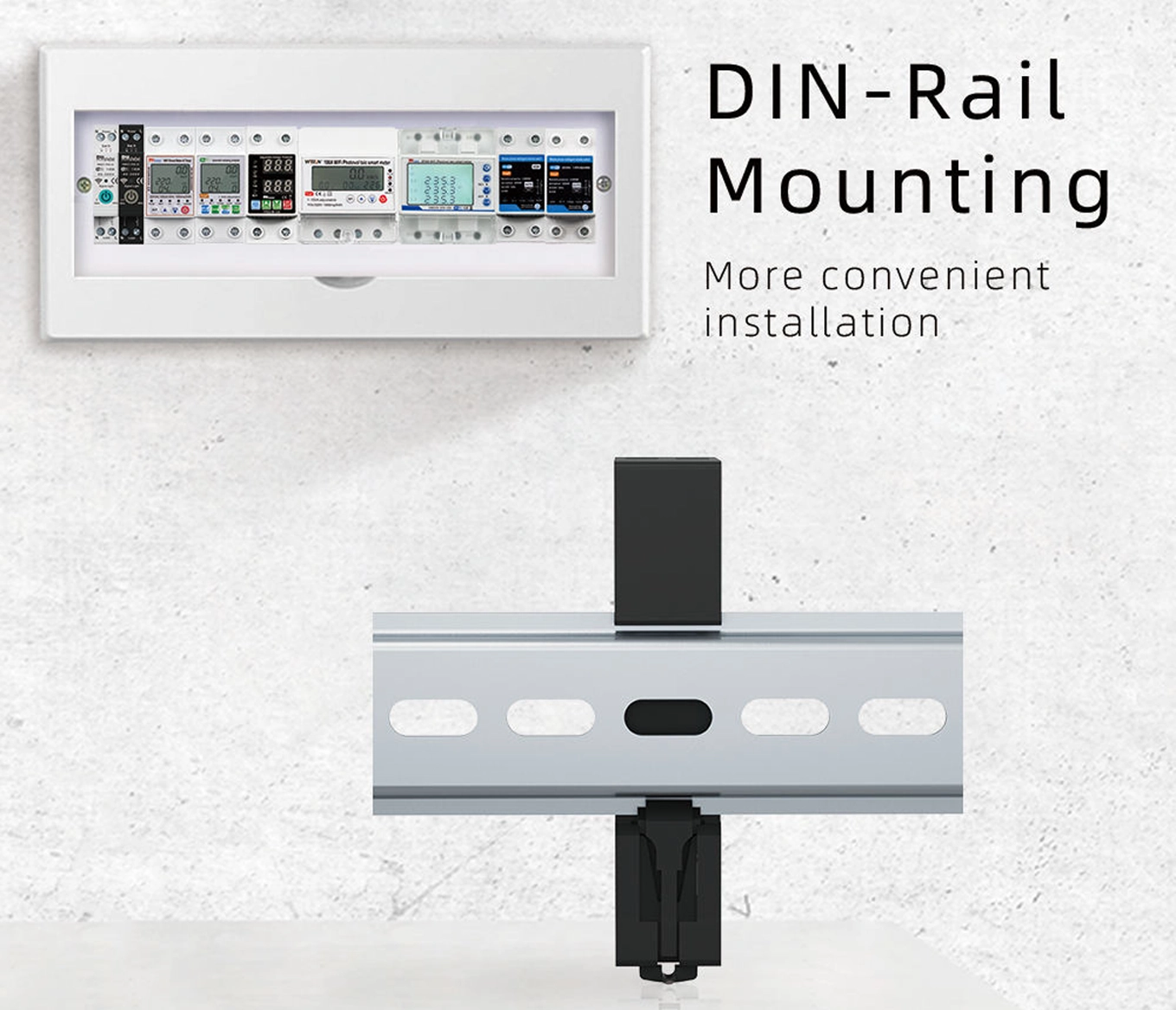
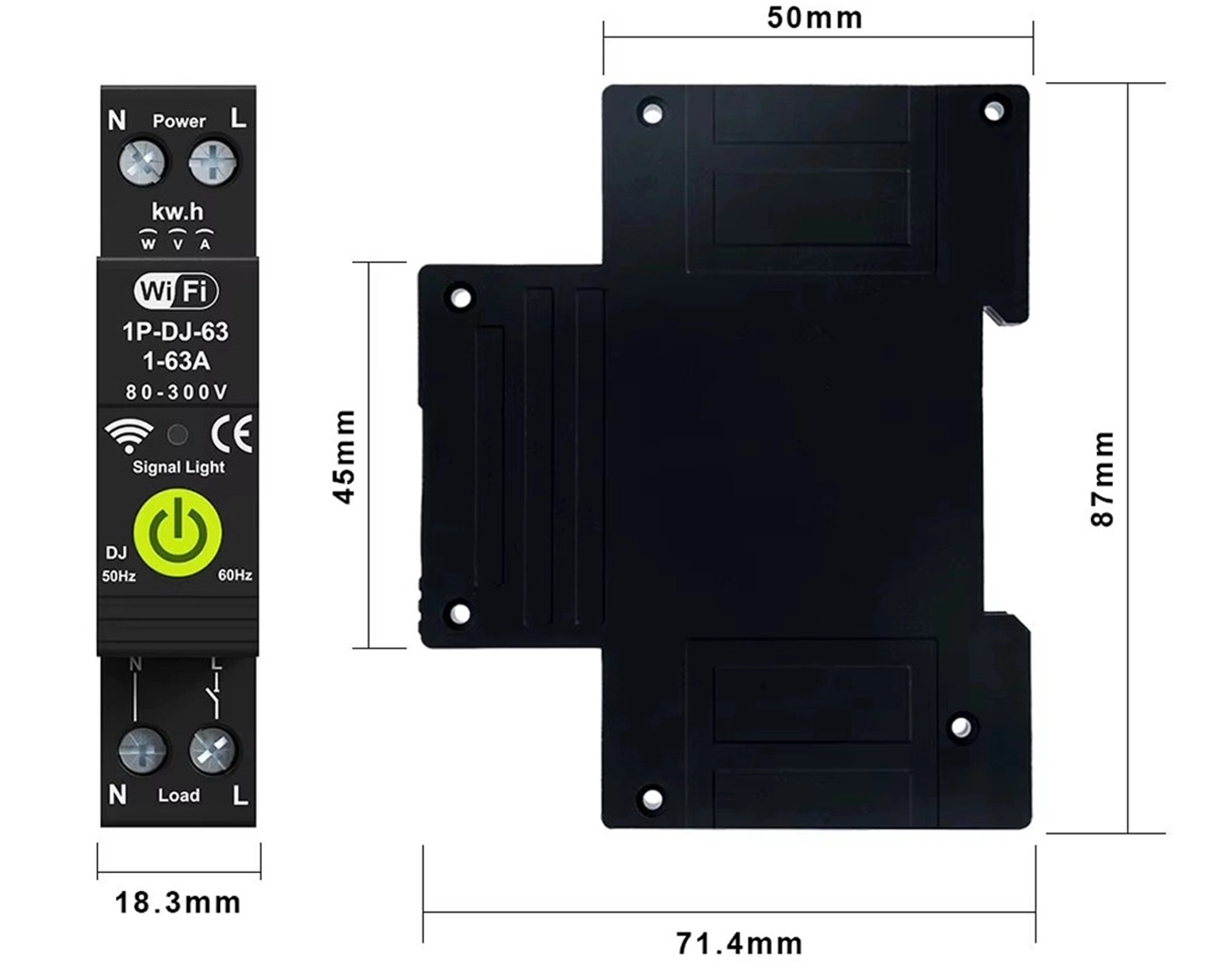
Single module on a 35 mm DIN rail: clips onto the distribution board's DIN rail and takes up just one module: 18.3 mm wide, 87 mm high and 71.4 mm deep.
2.4 GHz WiFi with no hub: connects directly to your home router over the 2.4 GHz network, with no gateway or hub required; press and hold the button for 5 seconds to pair.
Installation in the distribution board: must be installed by an electrician. Leakage protection has an adjustable delay and does not replace the installation's residual current device (RCD).
Secure payments: cards, PayPal, bank transfer, and installments
Delivery within 48 hours: Free shipping on orders over €150 across Europe
Easy 14-day returns: follow the steps to get your refund
1-63A DIN rail WiFi circuit breaker with power consumption and dispersion measurement
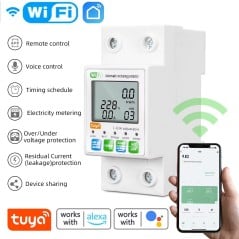
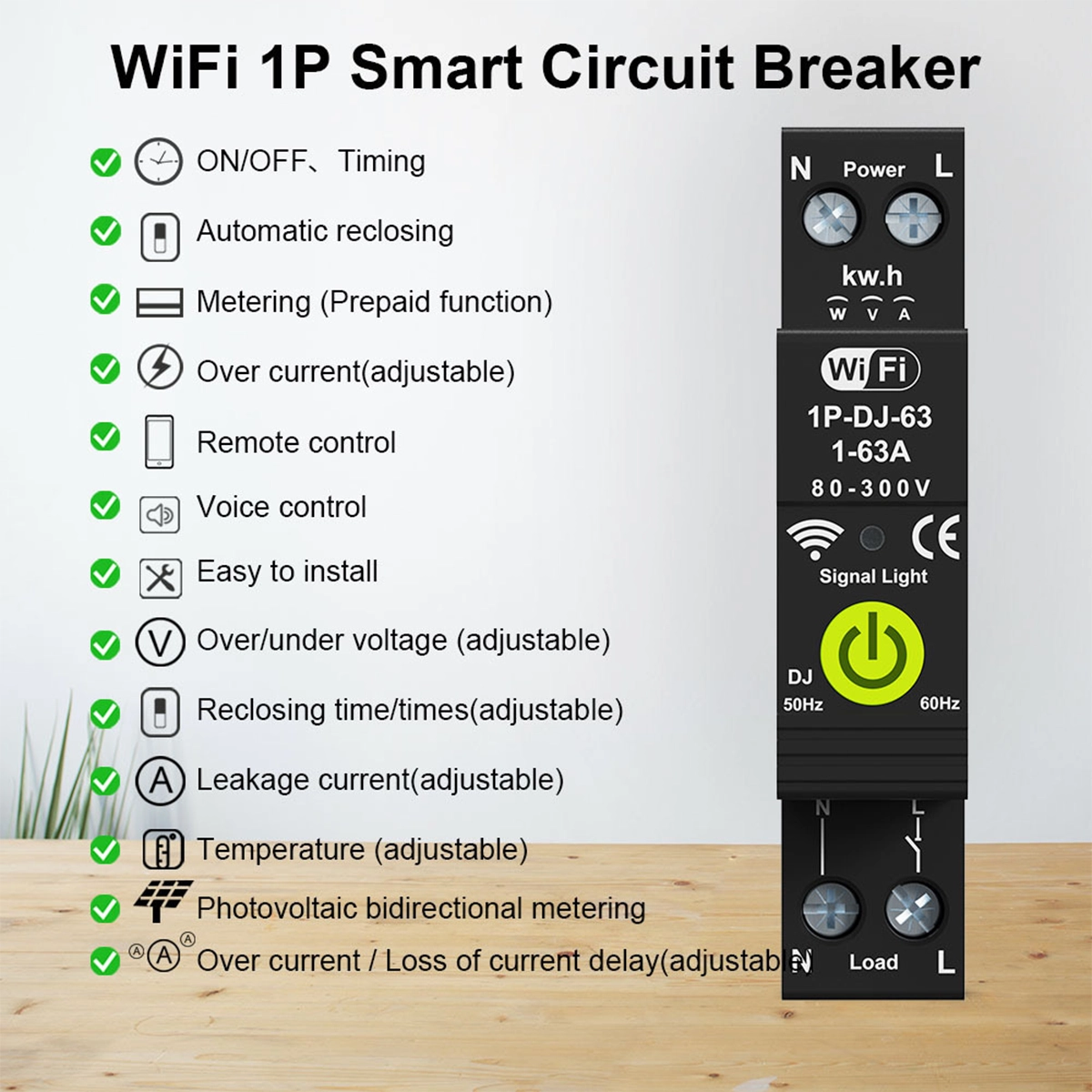
The Tuya DIN-railWiFi circuit breaker controls and protects a single-phase line from 1 to 63 A directly from the electrical panel. Using the Tuya Smart or Smart Life app, you can turn it on and off from anywhere, set the thresholds for overcurrent, minimum and maximum voltage, leakage, and temperature , and choose how it should close after a trip. It measures voltage, current, and power in real time and counts energy in both directions, so with a photovoltaic system you can see how much energy you draw from the grid and how much you feed in. It also has a prepaid function, up to 30 time schedules, and voice control with Alexa and Google Home. It operates from 80 to 300 V AC, occupies a single 18.3 mm module, and includes a ring for measuring leakage current .
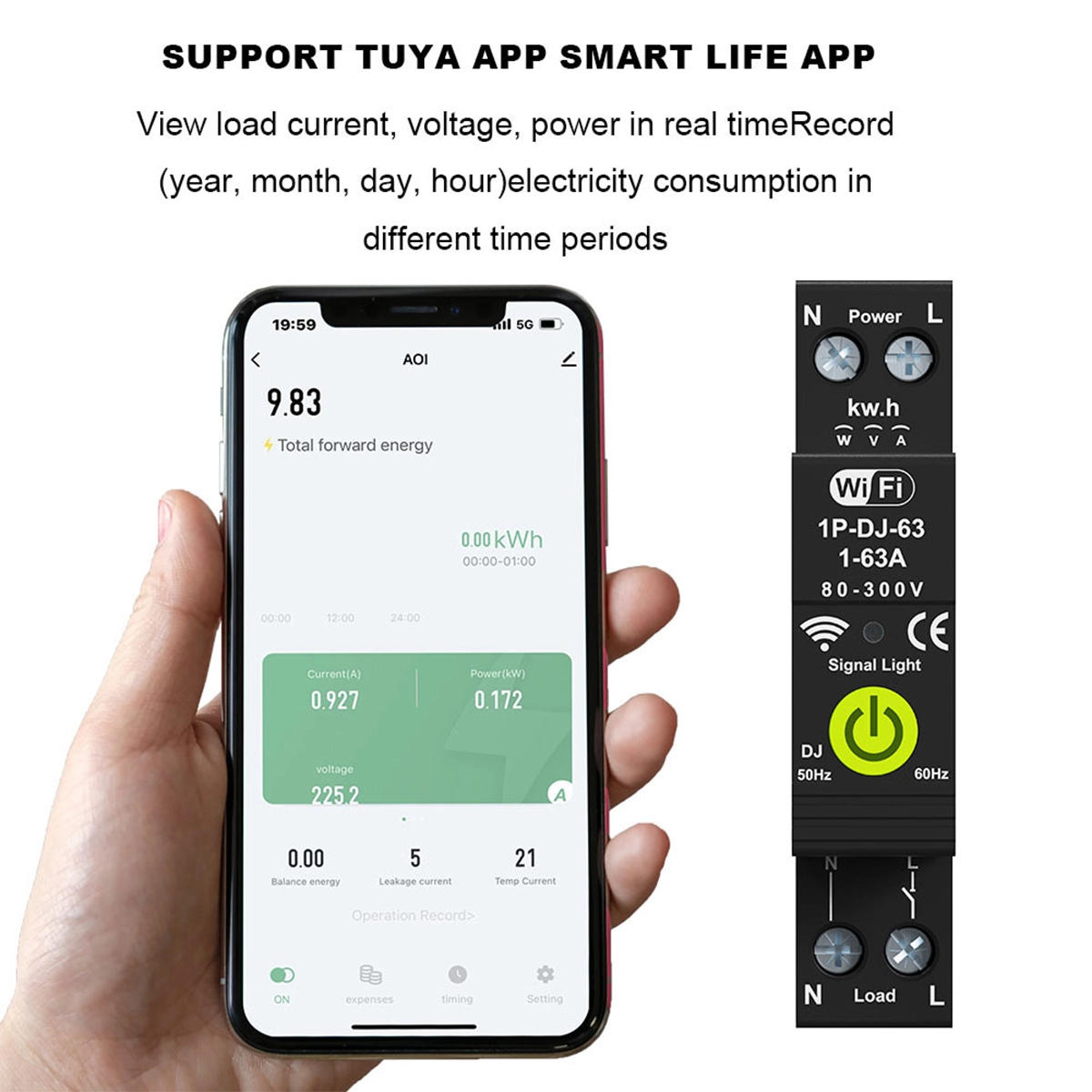
Real-time voltage, current, power and dispersion in the app
On the device page, in the Tuya Smart or Smart Life app, you can read the voltage , current , and power of the line in real time, along with leakage current and temperature. The consumption history is divided by hour, day, month, and year, so you can compare periods and understand when the line draws the most. The app also tracks protection trips and displays the total energy drawn. The voltage measurement is accurate to within 1%. If multiple people need to manage the system, share the device with other accounts in the family: each person can control it and view the data from their own phone, without exchanging login details.
Turn the line on and off with your voice via Alexa and Google Home
After connecting your Tuya or Smart Life account to Amazon Alexa or Google Home , you can turn the line on and off with a voice command, without picking up your phone or going to the control panel. It's convenient when your hands are full, for example in the kitchen, or to turn off a load left on in another room with a single command. The voice command acts on the switch output, therefore on everything connected downstream: a dedicated socket, a water heater, a pump, or the circuit breaker in a room. The protection thresholds and reset times, however, can only be set from the app. The switch can also be included in voice assistant routines.
Front button and LED to see the line and WiFi status
On the front, there's a button and an LED. The button turns the line on and off manually, directly from the panel, even without a phone, and changes color with the status: green when the line is on, red when it's off. The "Signal Light" LED indicates the connection: it's solid when the switch is connected to WiFi, and flashes when it's waiting for a connection. To pair it, hold down the button for 5 seconds until the LED flashes quickly, then add the device from the app, in the Power section. A 2.4 GHz WiFi network is required: 5 GHz-only networks are not supported, so if your router separates them, choose the 2.4 GHz one.
Bidirectional measurement for photovoltaic systems between the grid and the home
With a photovoltaic system, the switch connects between the grid , the inverter , and the home: the upper terminals go to the meter, the lower ones to the home's wiring, where the inverter line also arrives. In this position, energy counts in both directions : the energy you draw from the grid when the panels aren't enough, and the energy you feed into the grid when you produce more than you consume. In the app, you can see the energy fed into the grid by hour, day, month, and year, alongside the energy you draw. It works on single-phase lines from 80 to 300 V. The connection to the photovoltaic system must be performed by an electrician, in compliance with the regulations and protections already present in the panel.
Timer, countdown and cycle: up to 30 programs
From the app, you can set up to 30 schedules in four modes. With the scheduled timer , the line turns on and off at a fixed time, for example, at 6:30 PM before you return home. With the countdown timer , it turns on or off after a set amount of time, such as ten minutes. The cycle repeats on and off every day between two times, for example, from 6:00 AM to 8:00 AM, while the pulse timer turns the line on for a short time and then turns it off automatically. Schedules are useful for water heaters, recirculation pumps, signs, and outdoor lights, so they stay on only when really needed.
Prepaid credit and consumption of all devices in the line
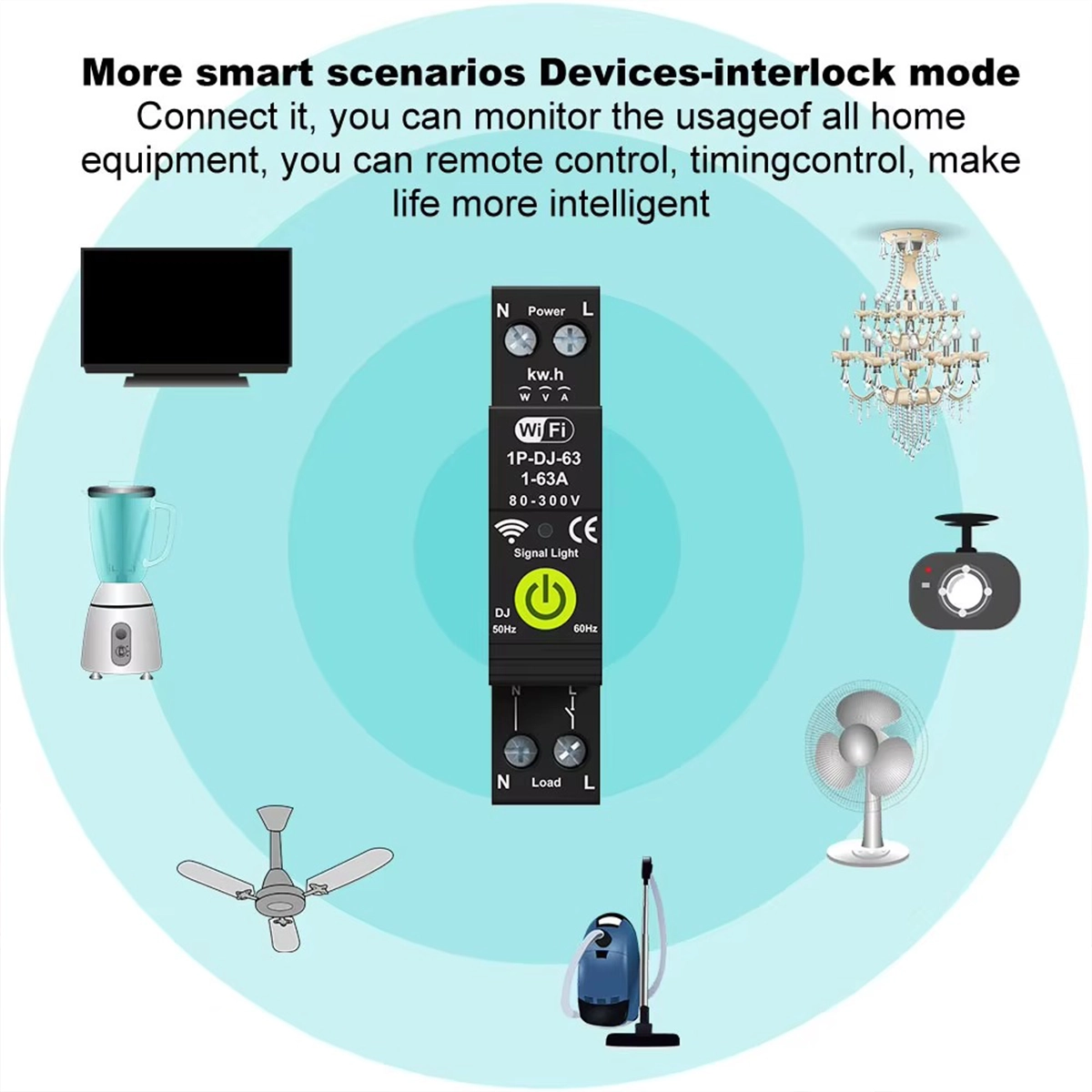
Everything connected downstream from the switch, from your television to your appliances, is measured: in the app, you can see how much the entire line is consuming and control it with a single device. With the prepaid function , you can top up your energy credit from the app; when it's used up, the switch automatically shuts off the line. It's a practical solution for a rental apartment, an outbuilding, a garage, or a workshop, whenever you want to allocate a defined amount of energy. The function can be activated and deactivated from the app, so when you're not using it, the switch works like a standard meter with remote control and adjustable protections.
Adjustable protections for current, voltage, dispersion and heat
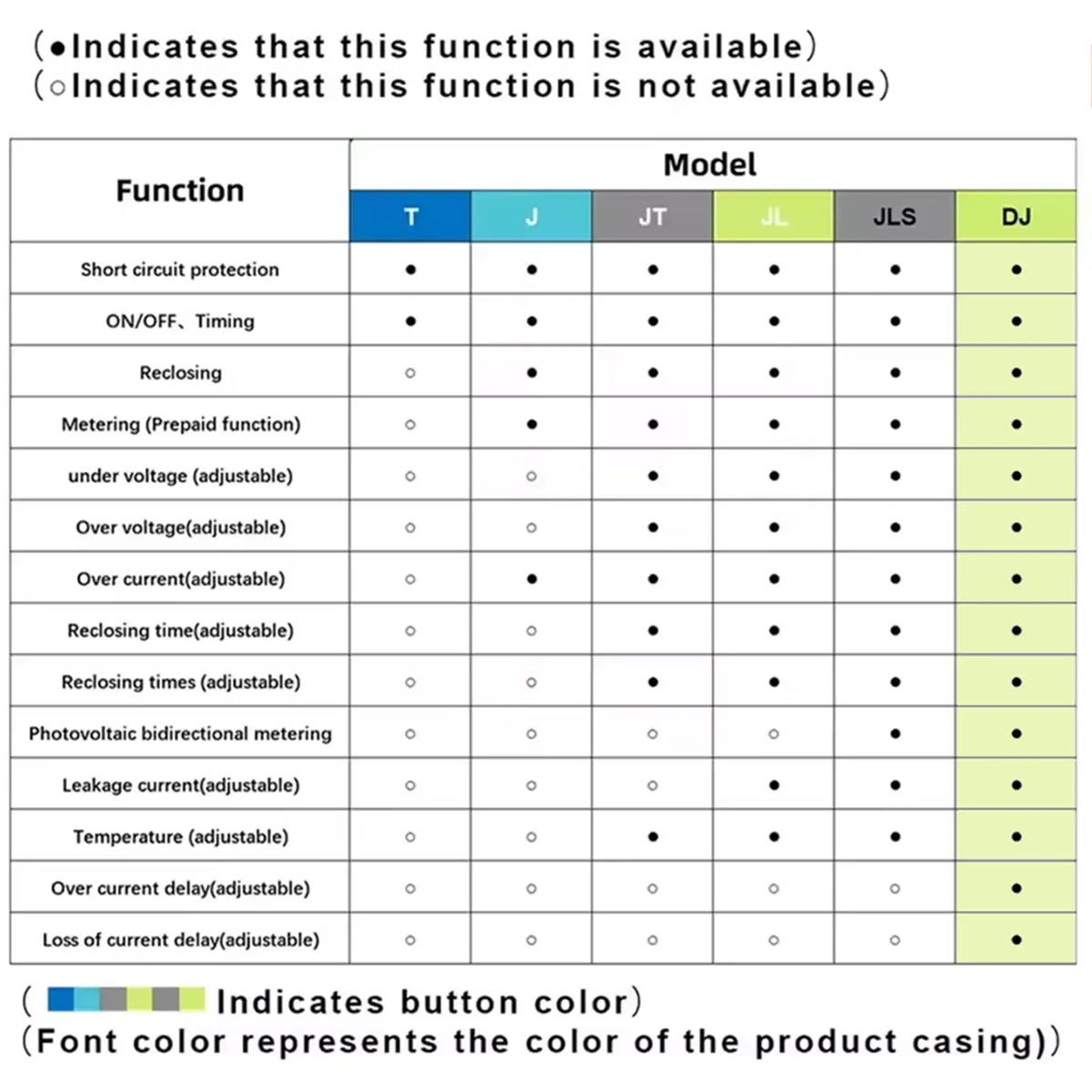
The protections are set in the app and each one activates or deactivates. Overcurrent protection ranges from 1 to 63 A in 0.1 A steps, minimum voltage from 80 to 210 V and maximum voltage from 120 to 300 V; there are also leakage protections , from 10 to 99 mA, and temperature protections. For overcurrent and leakage current protections, choose the trip delay, from 1 to 15 seconds. The circuit breaker also trips in the event of a short circuit . After a trip, it automatically closes after 10 to 99 seconds, depending on the number of attempts you choose. If you need another format, check out the Tuya 63A MCB circuit breaker or other smart DIN rail relays .
Tuya Smart WiFi Switch on DIN Rail with Energy Meter
€32.90€26.90
A 35mm DIN rail module with dispersion ring
The switch occupies a single module on a 35 mm DIN rail: it measures 18.3 mm wide, 87 mm high, and 71.4 mm deep. The mains phase and neutral wires enter from the top terminals, while the bottom terminals carry the line to the load. The package includes a leakage current measuring ring , which connects below the output terminals. It has an IP20 protection rating, so it must be mounted inside the panel, with humidity up to 50% at 40°C. Installation must be performed by an electrician, and the leakage protection does not replace the system's differential circuit breaker . Other models are among the smart modules and relays .
Yes. It is included in the package and is used to measure the leakage current, which you can see in the app and which is affected by the adjustable protection from 10 to 99 mA.
Yes. Connected between the grid, inverter, and home, it measures energy in both directions and displays the energy fed into the grid by hour, day, month, and year in the app.
App-adjustable protection settings: set overcurrent from 1 to 63 A (in 0.1 A increments), undervoltage from 80-210 V, overvoltage from 120-300 V and temperature, each of which can be enabled or disabled.
Short-circuit protection and trip delays: trips in the event of a short circuit; use the app to set the overcurrent and leakage current protection trip delays from 1 to 15 seconds.
Leakage sensing ring included: the package includes a sensing ring connected to the circuit breaker: it detects leakage current, which you can view in the app, with protection adjustable from 10 to 99 mA.
Automatic reset: after tripping, the device recloses automatically after 10-99 seconds: use the app to select the delay and the number of retries before it remains open.
Real-time monitoring: view voltage, current, power, leakage current and temperature in the app, along with the trip count and energy consumption history by hour, day, month and year.
Bidirectional metering for solar PV: measures energy in both directions: from and to the grid. Connected between the meter, inverter and home, it shows how much energy you draw from and feed into the grid.
Prepaid function: top up an energy credit via the app: when the credit runs out, the circuit breaker automatically disconnects the circuit. Useful, for example, in a rental apartment.
Timer and remote control: switch the circuit on and off via the Tuya Smart or Smart Life app, even when away from home, with up to 30 schedules: timed, countdown, cycle and pulse.
Alexa and Google Home: control the circuit by voice via Amazon Alexa and Google Home after linking your Tuya or Smart Life account.
Front button and LED: the green button on the front switches the circuit on and off manually, directly at the distribution board; the “Signal Light” LED indicates the WiFi signal status.
80-300 V power supply: operates on single-phase circuits at 80 to 300 V AC, 50/60 Hz, with live and neutral inputs at the top and outputs to the load at the bottom. IP20 protection rating.
Single module on a 35 mm DIN rail: clips onto the distribution board's DIN rail and takes up just one module: 18.3 mm wide, 87 mm high and 71.4 mm deep.
2.4 GHz WiFi with no hub: connects directly to your home router over the 2.4 GHz network, with no gateway or hub required; press and hold the button for 5 seconds to pair.
Installation in the distribution board: must be installed by an electrician. Leakage protection has an adjustable delay and does not replace the installation's residual current device (RCD).