Flexible Stainless Steel Cable Gland for Doors and Access Control
€8.91
Tax included
No review at the moment
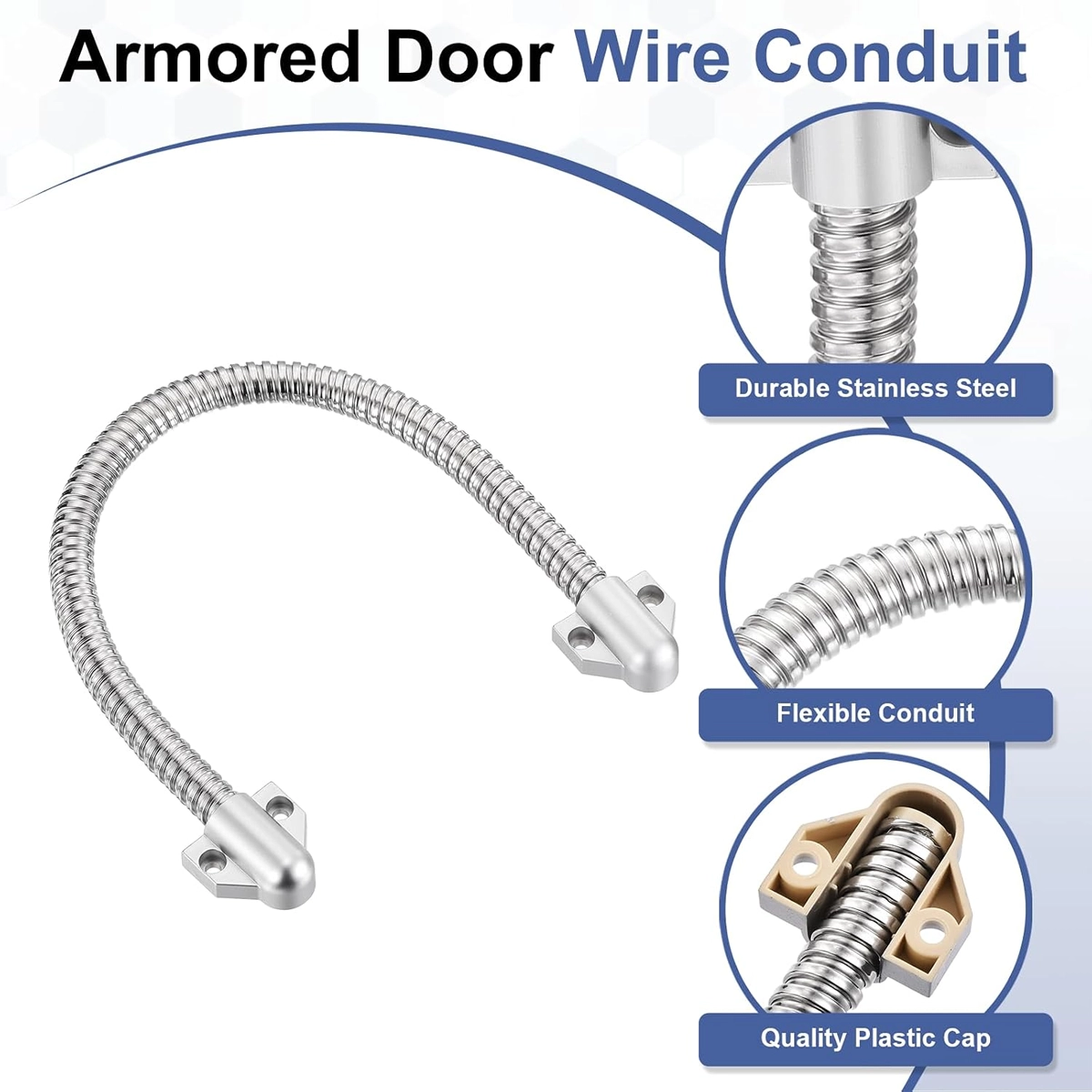
Protects cables between door leaf and frame: routes wires from the door to the frame inside a flexible stainless steel tube, so they aren’t exposed, crushed, or pulled with each opening.
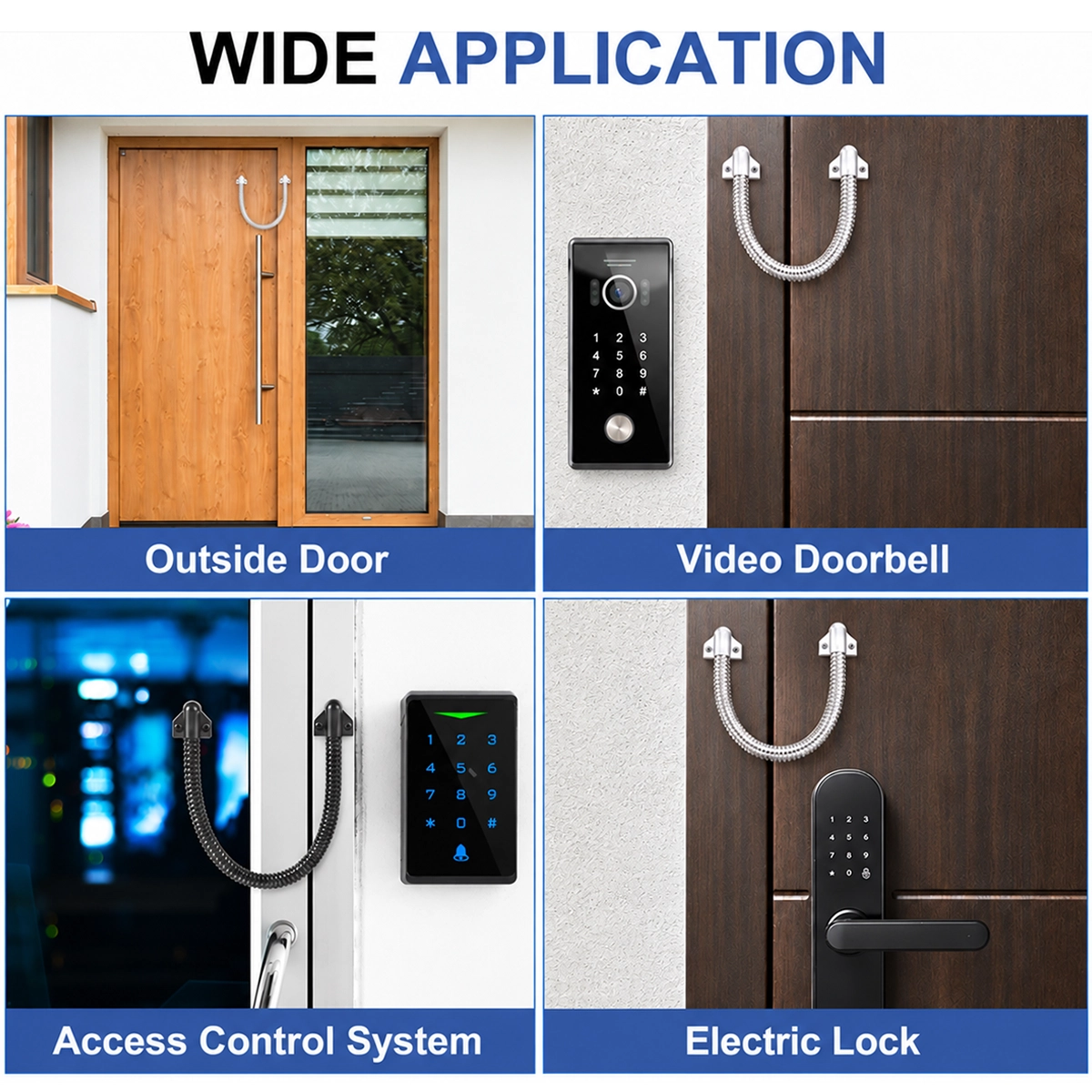
For electric locks and access control: carries power and signal to mortise electric strikes, electronic handles, keypads, and readers mounted on the door leaf.
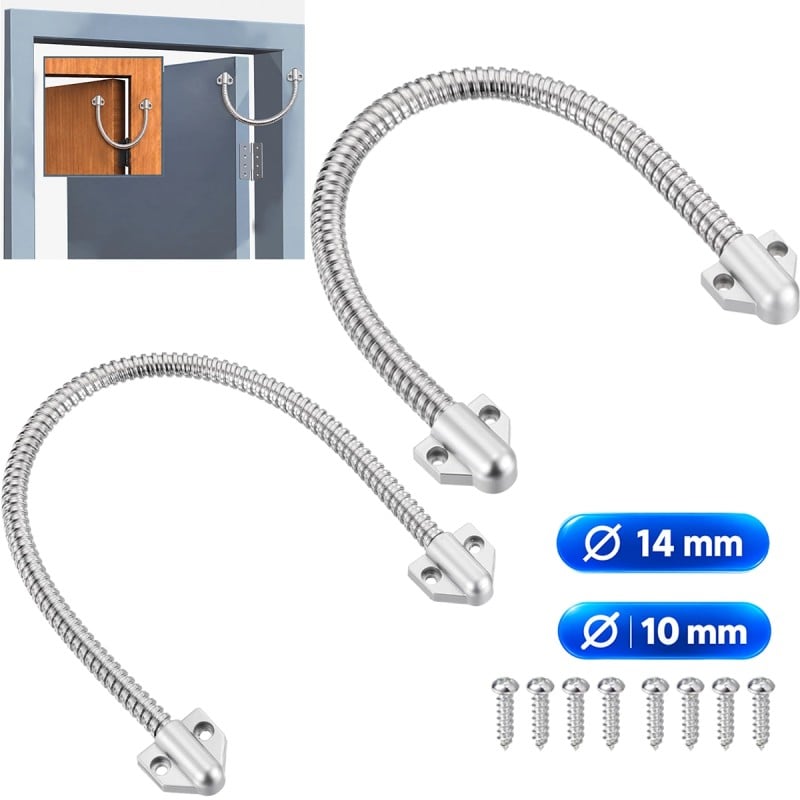
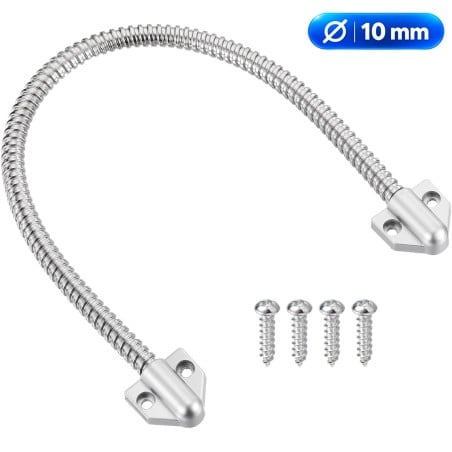
Two diameters available:Ø 10 mm with an 8 mm inner diameter, or Ø 14 mm with an 11 mm inner diameter. Choose based on the cable bundle you need to route.
Cables up to 6.5 or 9.5 mm: per the manufacturer’s specs, the 10 mm model accommodates cables up to 6.5 mm in diameter, the 14 mm model up to 9.5 mm.
40 cm tube: the conduit sheath is 400 mm long; with both end caps, the overall length is 450 mm end to end.
Zinc-alloy end caps: both terminals are made of zinc alloy, each with two mounting holes: one screws to the door leaf, the other to the frame.
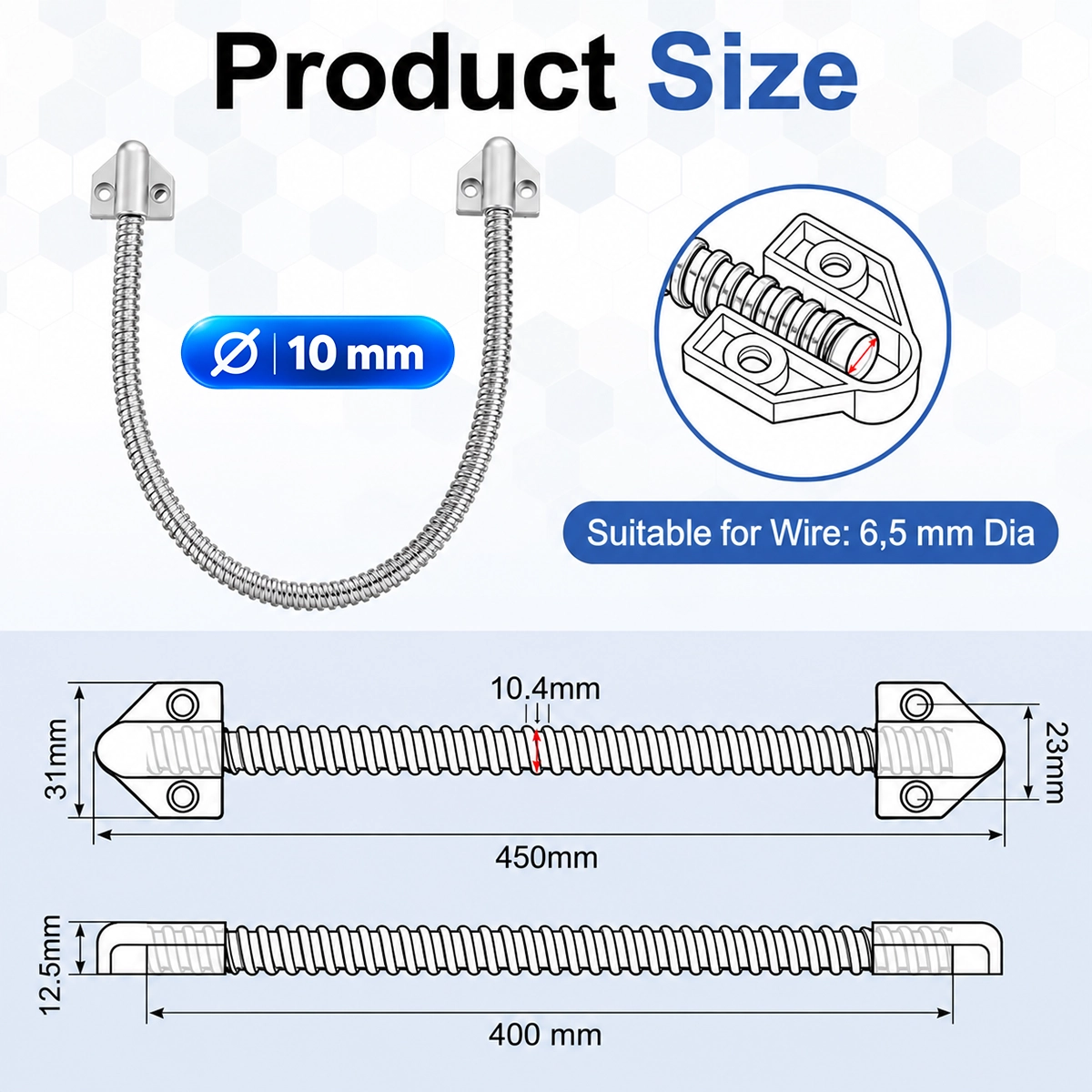
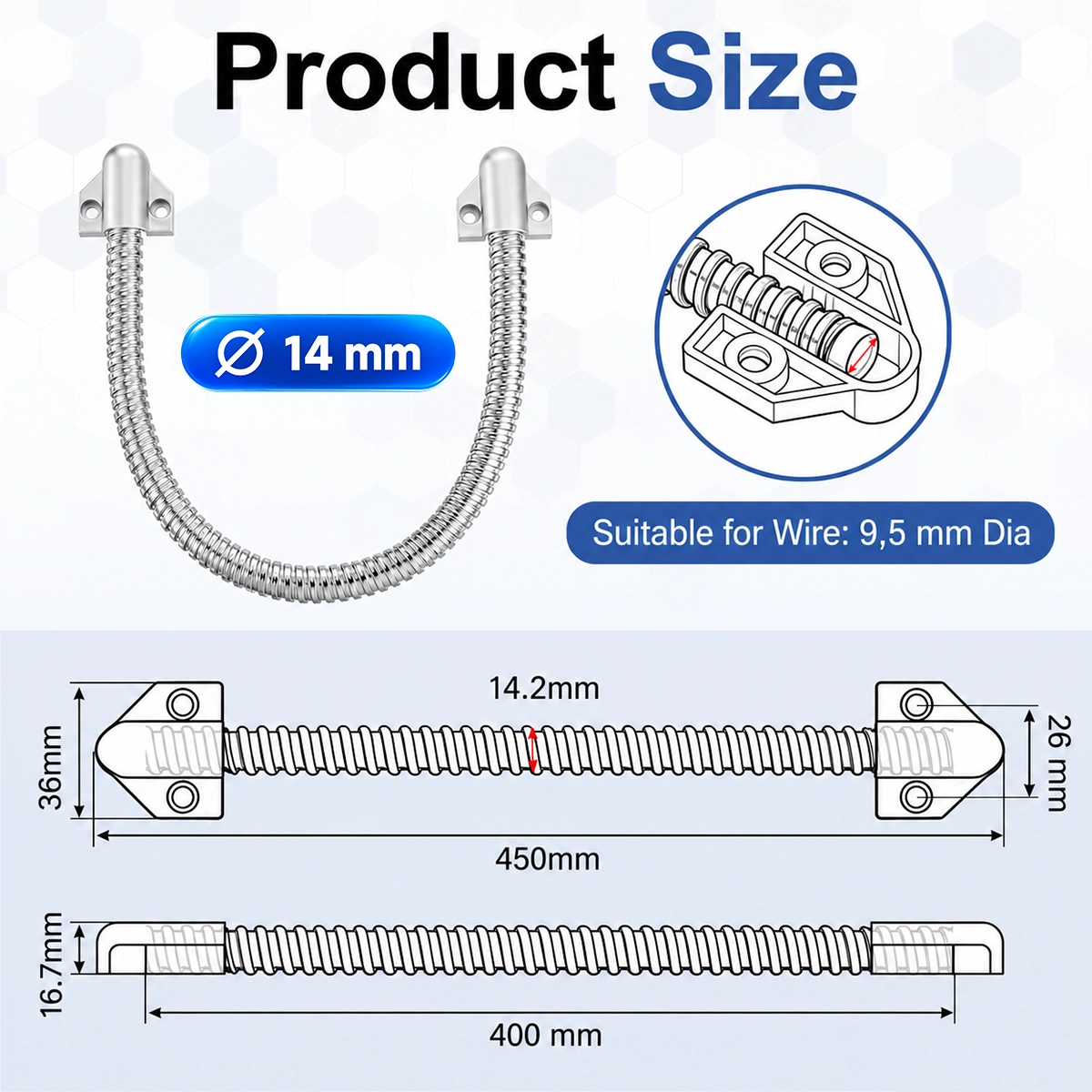
End cap dimensions:31 × 23 mm, 12.5 mm high, on the 10 mm model; 36 × 26 mm, 16.7 mm high, on the 14 mm model. Check available space on the door and frame.
Plastic insert in the end cap: inside each terminal there is a plastic insert where the tube seats, as shown in the detail photo in the gallery.
Surface-mounted with screws: secure the two end caps with the 4 screws included. Typically installed on the hinge side, where the door moves less.
For interior and exterior doors: suitable for entrance doors, office and store doors, and pedestrian gates. The manufacturer rates it against tampering and weather.
Passive accessory: requires no power and connects to no app. Cables, lock, and power supply are sold separately: the package includes the conduit and screws.
Secure payments: cards, PayPal, bank transfer, and installments
Delivery within 48 hours: Free shipping on orders over €150 across Europe
Easy 14-day returns: follow the steps to get your refund
Flexible stainless steel cable gland for doors: protected cables between door and frame
The flexible cable gland runs the cables from the door to the frame inside a stainless steel tube, ensuring the wires aren't exposed or crushed every time the door is opened. It's useful when there's something to power or connect to the door: an electric mortise lock, an electronic handle, a reader, or a keypad. The two zinc alloy heads screw one onto the door and one onto the frame, usually on the hinge side; in the middle, the spiral tube bends and follows the movement of the door. It's available in two diameters, 10 or 14 mm , with a 40 cm tube and a total length of 450 mm. The package includes the cable gland and four screws; the cables, lock, and power supply are purchased separately.
For electric locks, keypads, video intercoms and access control
A cable gland is used wherever a cable must pass from the frame to a moving part. The most common case is access control : the electric lock mounted in the door receives power and signals from the control unit, and the wires must pass through the gap between the door and the frame. The same applies to a keypad or card reader mounted on the door, a video intercom mounted near the entrance, and an electronic handle. The steel tube holds the power and signal together in a single, neat and visible path. If you're designing a controlled entrance, you'll find keypads, readers, and control units in the smart access control category.
Cables protected from crushing on gates and entrance doors
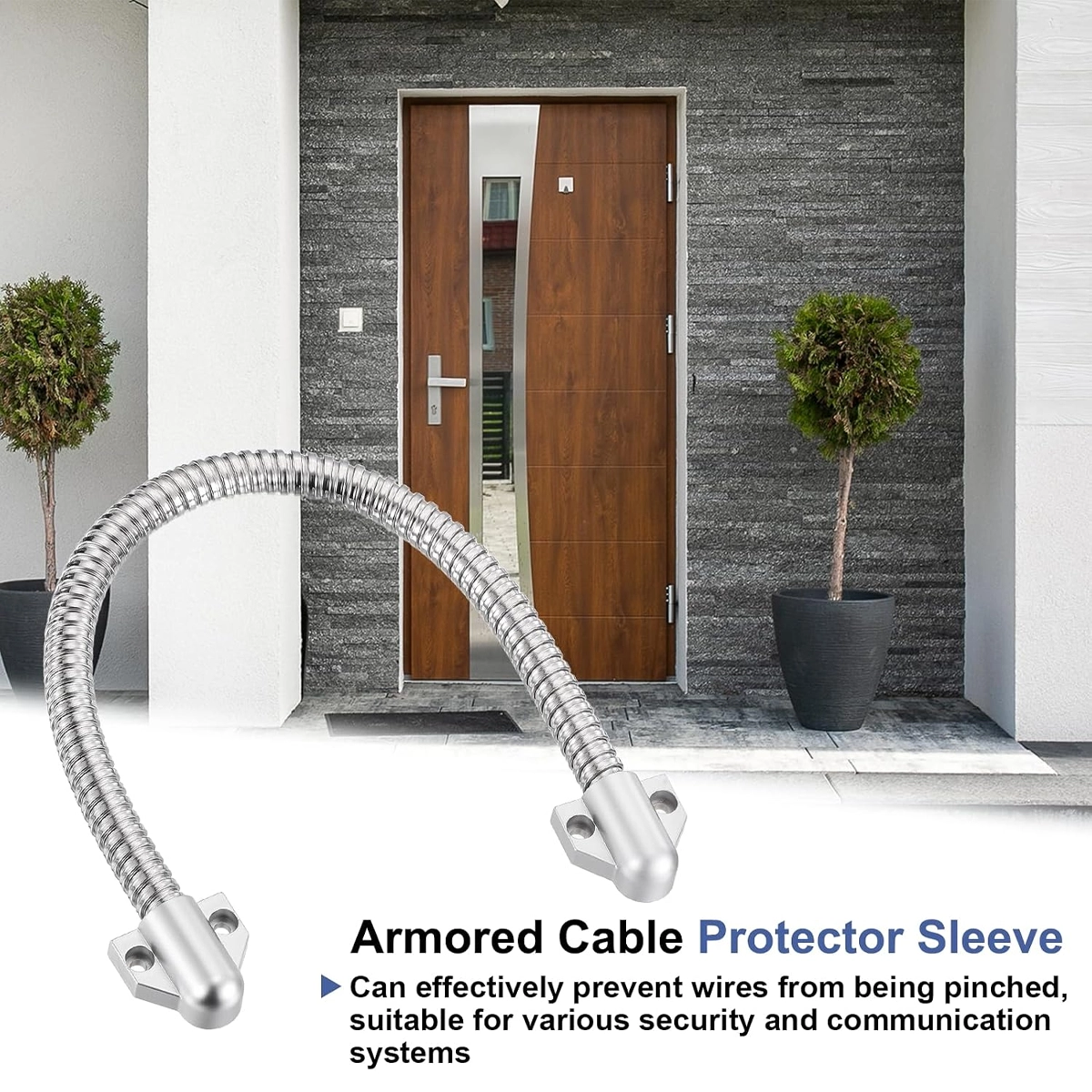
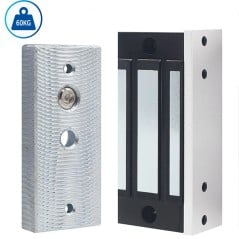
Without protection, the wires running through the gap between the door and the frame are crushed every time the door is closed and eventually become stripped or broken. The stainless steel tube protects them: the manufacturer specifies this to prevent the wires from being pinched in security and communication systems . It's useful when there's a device on the door that needs power, such as an electric mortise lock or an electronic handle. With a traditionally mounted electromagnetic lock , with the magnet on the frame and the plate on the door, the cable stays on the frame and the cable gland is unnecessary. Below you'll find the circuit board, keypad, and power supply that complete a controlled entry system.
Tuya Smart Power Supply for Door Access Control System
€22.90€18.90
No exposed wires: protection from tampering and bad weather
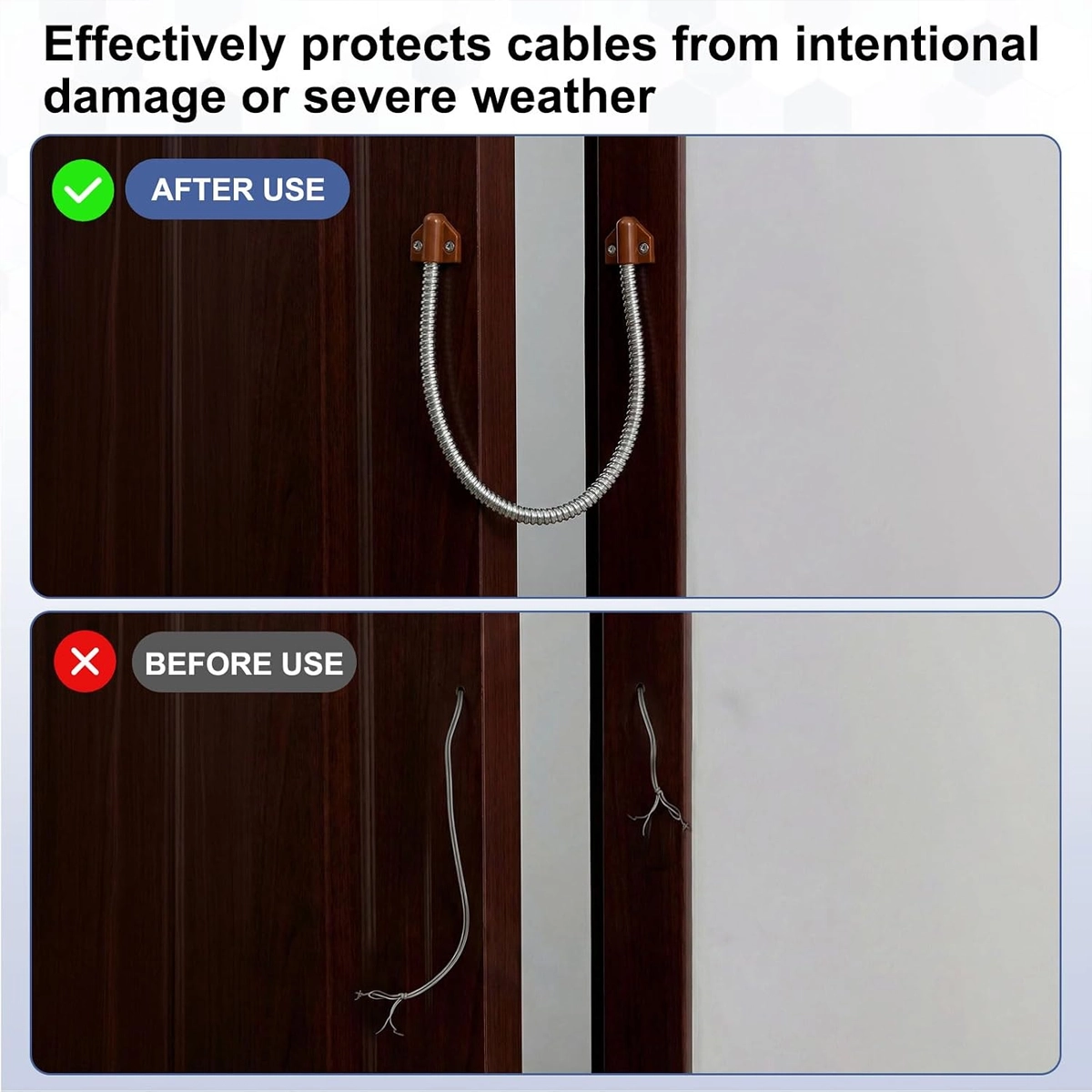
The image shows the difference. Without a cable gland, the wires hang freely along the jamb: anyone can pull or cut them, and rain and sun can damage them. With the cable gland installed, they remain enclosed in the stainless steel tube , secured at both ends. The manufacturer specifies it as being protected from intentional damage and inclement weather, so it's also suitable for gates, pedestrian gates, and service doors. However, it doesn't specify an IP rating: on doors exposed to rain, cable joints must still be made in waterproof boxes. With the ends screwed onto the door and frame, the cable path remains the same every time the door is opened and closed.
Two diameters, 10 or 14 mm: tube, head and cable sizes allowed
The two versions have the same 400 mm tube and a total length of 450 mm ; the diameter and heads differ. The 10 mm model has an internal diameter of 8 mm, accommodates cables up to 6.5 mm , and has 31 x 23 mm heads, 12.5 mm high. The 14 mm model has an internal diameter of 11 mm, accommodates cables up to 9.5 mm , and has 36 x 26 mm heads, 16.7 mm high. If you're running a single thin cable, the 10 mm is sufficient; for multiple cables or a thicker cable, choose the 14 mm. Before ordering, check the clearance between the door and frame for the heads. Diameter and price are chosen in the variant.
It runs the cables from the frame to the door inside a stainless steel tube, so they're not exposed or pinched every time the door is opened. This is useful when there's a device that needs to be powered or connected to the door.
Screw one head onto the door and one onto the frame with the four included screws. It's usually mounted on the hinge side, where the door moves the least.
Usually not: in the classic installation, the magnet is on the frame and there's only the plate on the door, which has no cables. It's only necessary if the powered device is mounted on the door.
Yes, the manufacturer specifies that it is tamper-proof and weatherproof. It doesn't specify an IP rating: cable joints must be made in waterproof boxes.
Protects cables between door leaf and frame: routes wires from the door to the frame inside a flexible stainless steel tube, so they aren’t exposed, crushed, or pulled with each opening.
For electric locks and access control: carries power and signal to mortise electric strikes, electronic handles, keypads, and readers mounted on the door leaf.
Two diameters available:Ø 10 mm with an 8 mm inner diameter, or Ø 14 mm with an 11 mm inner diameter. Choose based on the cable bundle you need to route.
Cables up to 6.5 or 9.5 mm: per the manufacturer’s specs, the 10 mm model accommodates cables up to 6.5 mm in diameter, the 14 mm model up to 9.5 mm.
40 cm tube: the conduit sheath is 400 mm long; with both end caps, the overall length is 450 mm end to end.
Zinc-alloy end caps: both terminals are made of zinc alloy, each with two mounting holes: one screws to the door leaf, the other to the frame.
End cap dimensions:31 × 23 mm, 12.5 mm high, on the 10 mm model; 36 × 26 mm, 16.7 mm high, on the 14 mm model. Check available space on the door and frame.
Plastic insert in the end cap: inside each terminal there is a plastic insert where the tube seats, as shown in the detail photo in the gallery.
Surface-mounted with screws: secure the two end caps with the 4 screws included. Typically installed on the hinge side, where the door moves less.
For interior and exterior doors: suitable for entrance doors, office and store doors, and pedestrian gates. The manufacturer rates it against tampering and weather.
Passive accessory: requires no power and connects to no app. Cables, lock, and power supply are sold separately: the package includes the conduit and screws.