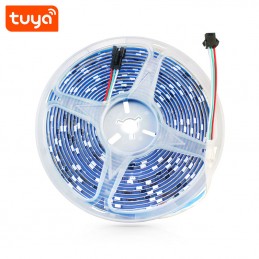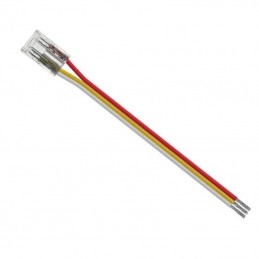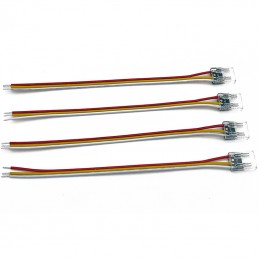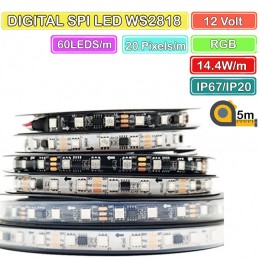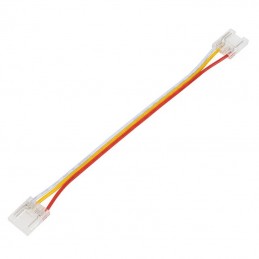
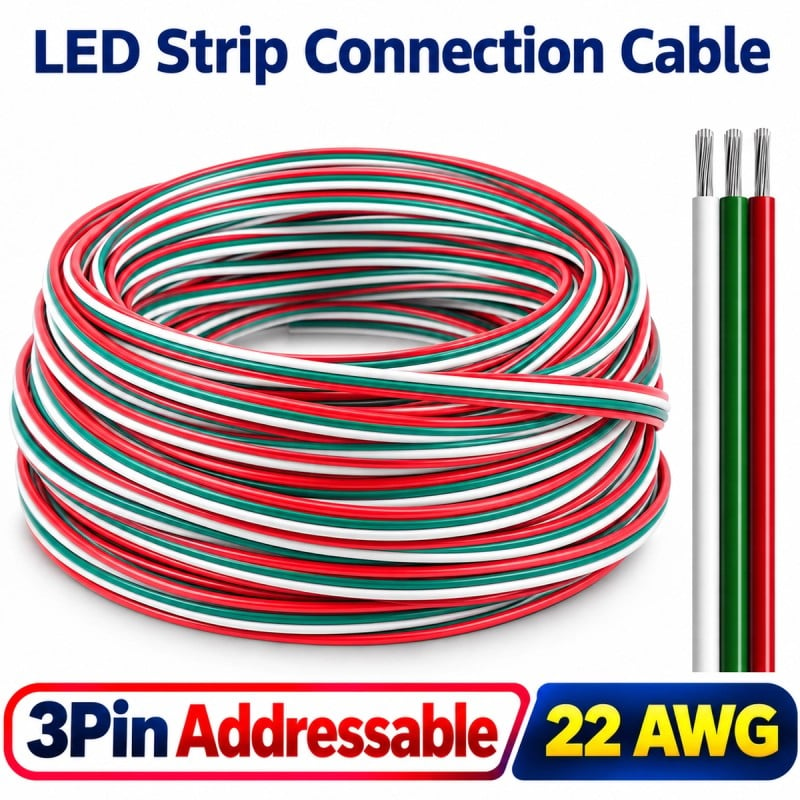
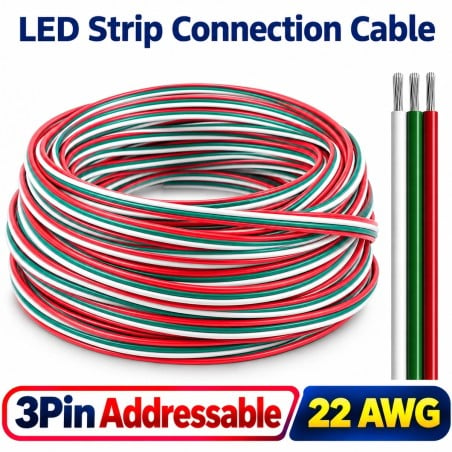
Three wires for addressable LEDs: connects the three pins of an addressable LED strip: positive, data signal and negative, from the strip to the controller.
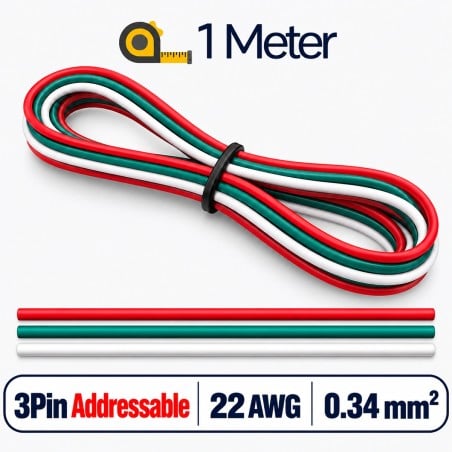
Red, green and white: the conductors come in three different colours: identify each wire at a glance and keep the same colour for the same pin from end to end.
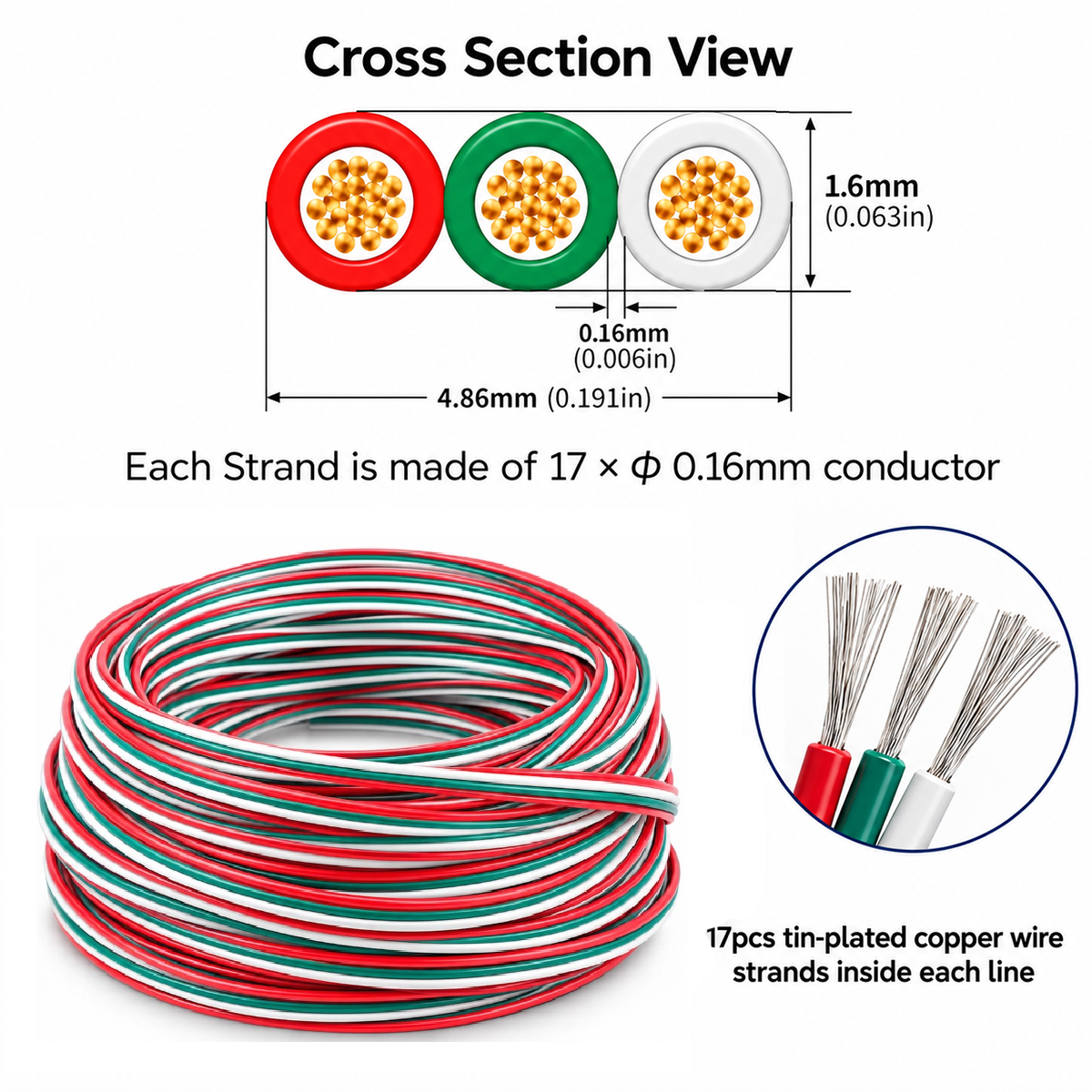
22 AWG cross-section: each conductor has a cross-section of 0.34 mm² (22 AWG) and consists of 17 strands measuring 0.16 mm each: it stays flexible and bends without breaking.
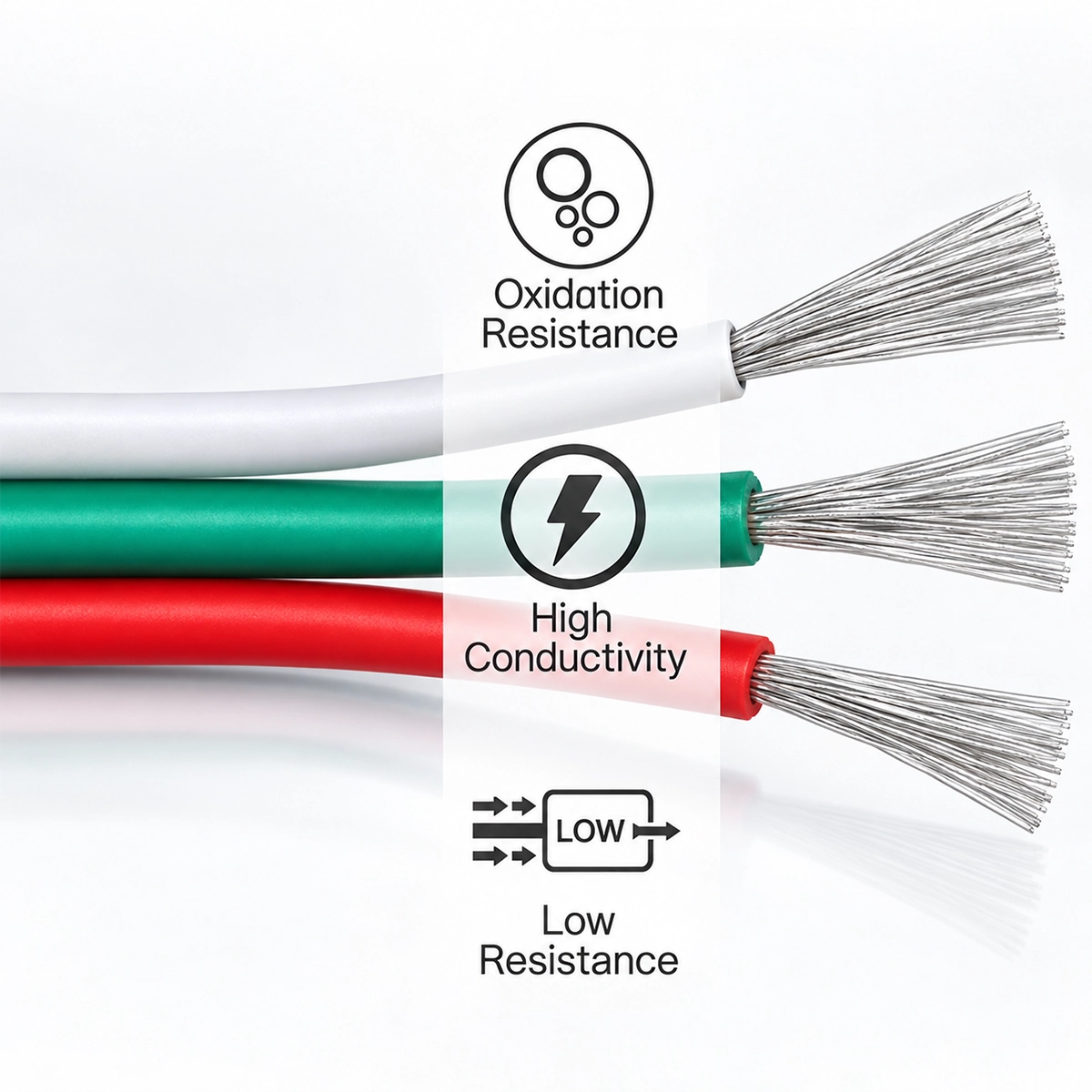
Tinned copper: the strands are made of tinned copper, which resists oxidation over time and readily accepts solder when you solder the cable to the strip's pads.
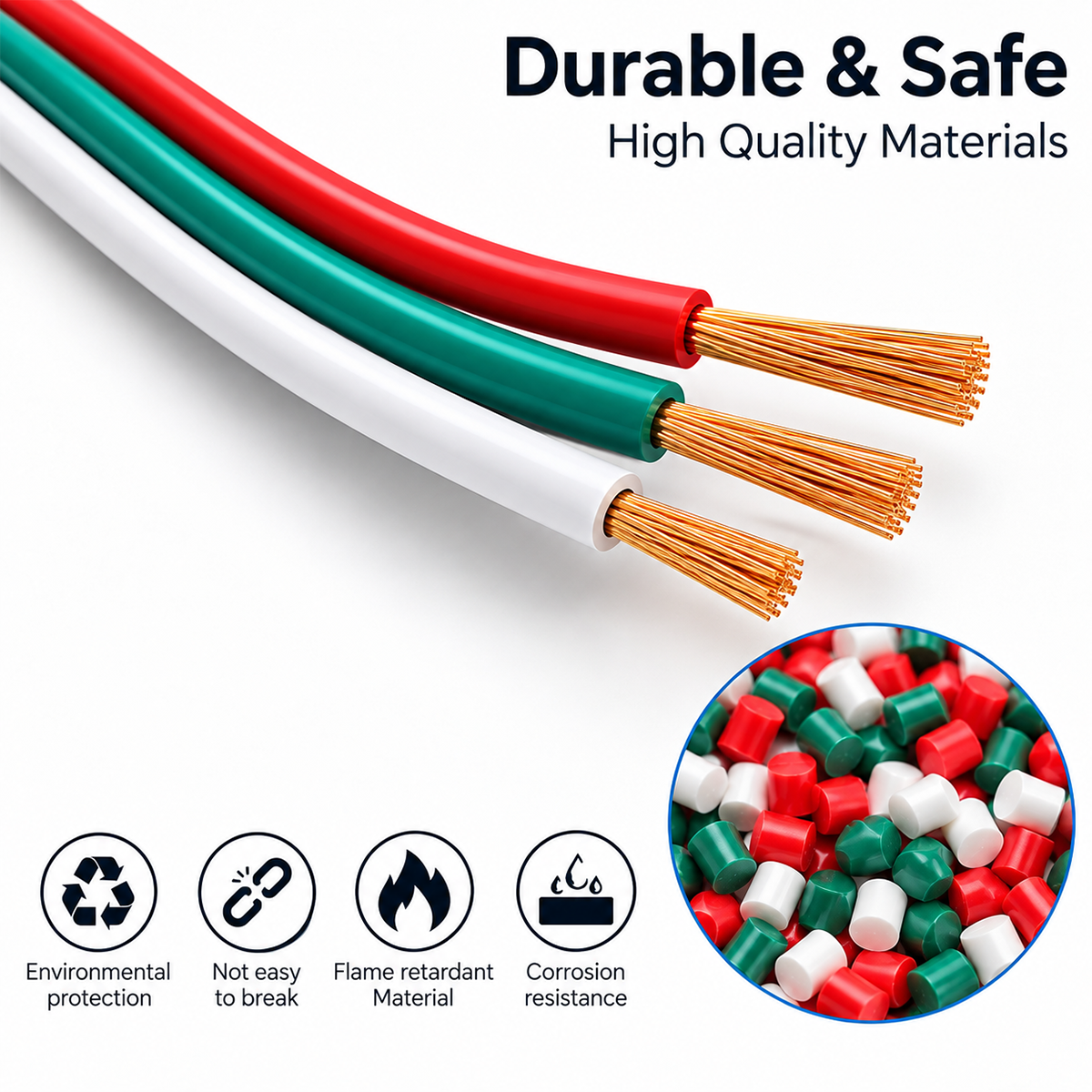
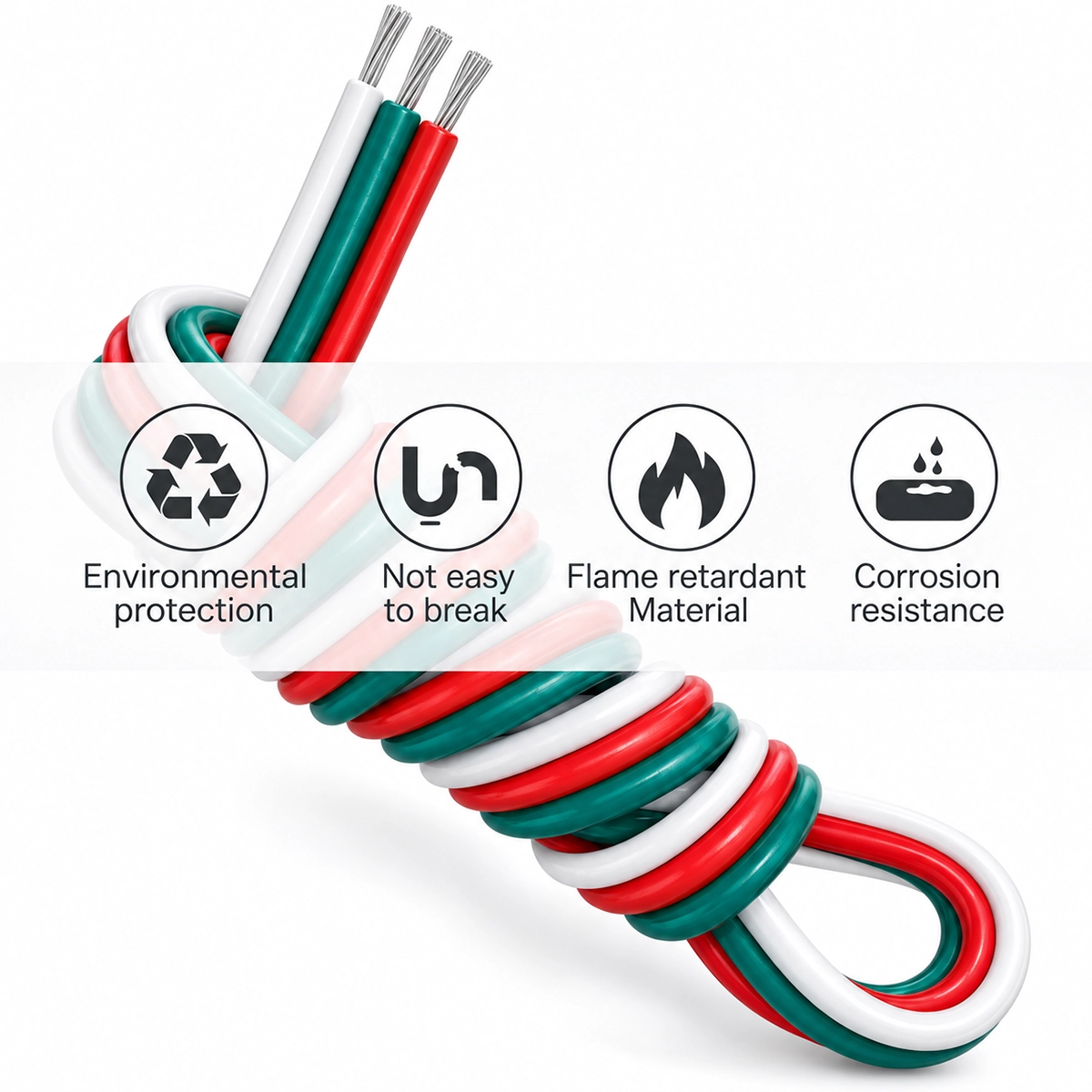
PVC insulation: each wire has its own flame-retardant PVC sheath (AWM 1007, VW-1 rating), with a rated voltage of 300 V and a temperature rating of up to 80 °C.
4.86 mm flat cable: the three wires sit side by side in a 4.86 mm wide ribbon that is 1.6 mm thick: it fits inside aluminium profiles, cable trunking and behind furniture.
Separable wires: the conductors can be pulled apart at the ends, so you can route each wire to its terminal or pad without cutting the insulation of the others.
1, 3 or 5 metres: choose the length you need from 1, 3 and 5 metres: a short length for a nearby connection, or a longer one to position the controller further away.
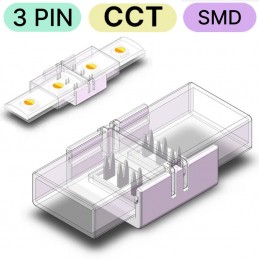
Unterminated ends: the cable comes without connectors: solder it to the strip, secure it in the controller's terminals or insert it into a 3-pin connector, including those for CCT strips.
Strip extension: use it as an extension between the strip and controller, to continue the strip around a corner or to run lighting from one piece of furniture to another.
For LEDs and more: designed for addressable LED strips, including RGBIC and pixel strips, it is also suitable for other low-voltage three-wire applications, such as lamps and small devices.
Uniform lighting: with high-power strips and long runs, keep the cable as short as possible and supply power at multiple points to maintain uniform lighting right to the end.
Passive accessory: no app, no protocol: the cable does not connect to WiFi. Strip, controller and power supply are sold separately.
Secure payments: cards, PayPal, bank transfer, and installments
Delivery within 48 hours: Free shipping on orders over €150 across Europe
Easy 14-day returns: follow the steps to get your refund
22 AWG 3-Pin Addressable LED Strip Wire, Red, Green, and White, Tinned Copper
The 3-pin addressable LED strip cable connects an RGBIC or pixel strip to its controller, or two sections of strip together. It carries the positive , data signal , and negative wires on three separate wires: these are the three connections an addressable strip needs to light up each segment with its own color. The conductors are red, green, and white, so keep the order the same from end to end. Each wire has a cross-section of 0.34 mm² (22 AWG) , is made up of 17 strands of tinned copper , and is insulated with flame-retardant PVC. The strip is 4.86 mm wide and 1.6 mm high. The ends are free, without connectors, and you can use it as an extension cable. It is available in three lengths: 1, 3, or 5 meters .
Tinned copper strands: less oxidation and easier soldering
Each conductor contains 17 0.16 mm strands of tinned copper . The tin coats the copper and protects it from oxidation, which over time darkens the exposed wires and makes the contacts less reliable. It also makes soldering easier: the tin adheres immediately to the strands and pads of the strip, even with a low-power soldering iron. The copper conducts current with low resistance , while the thin strands keep the cable flexible in corners and tight spaces. Before tightening a wire in a terminal, twist the strands well so that none are left loose and touch the adjacent conductor.
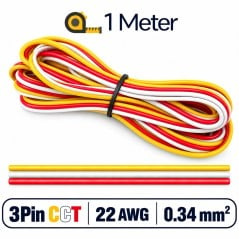
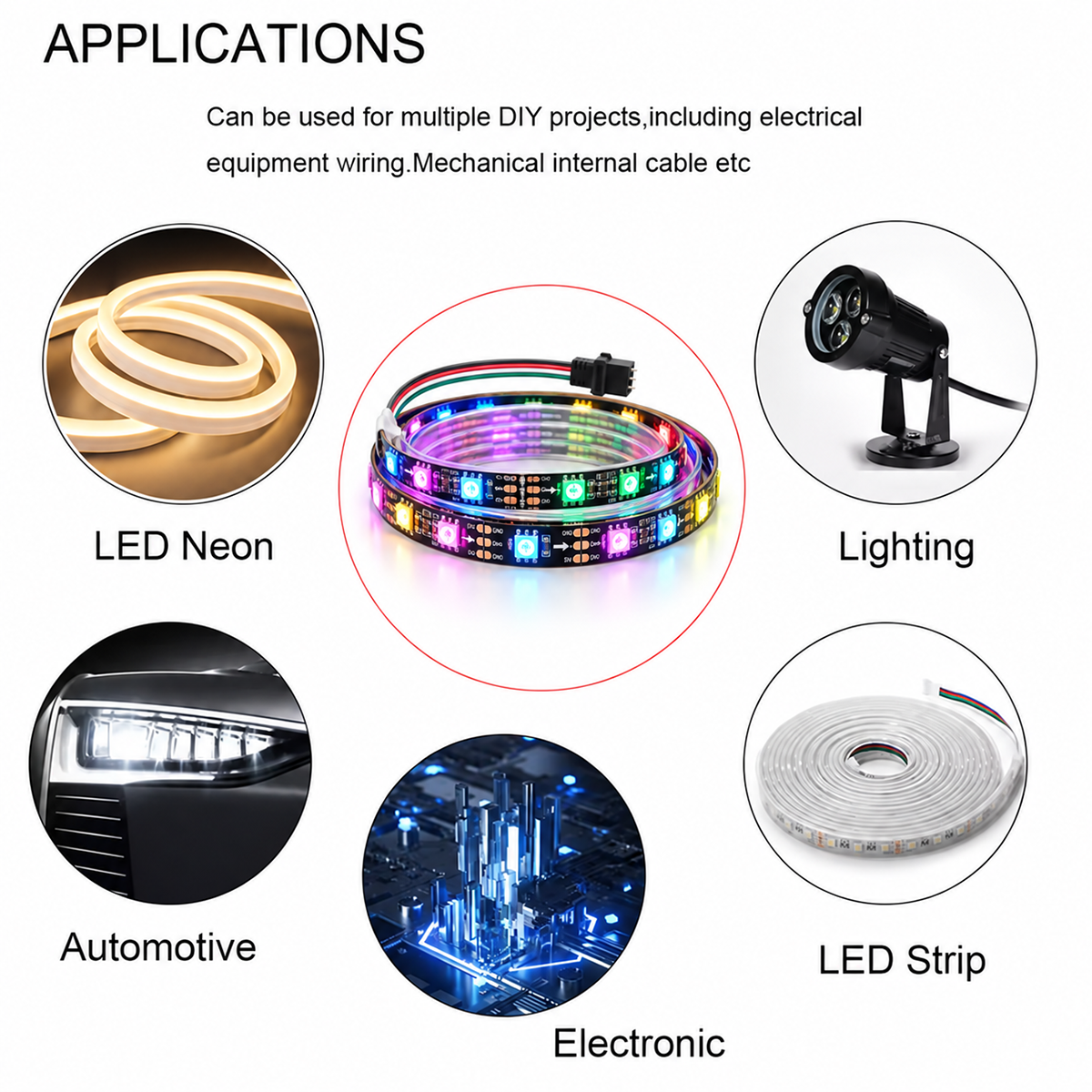
Where to use: Addressable LED strips, LED neon lights, and small wiring harnesses
The cable is designed for 3-pin addressable LED strips , such as the Tuya 3-pin RGBIC LED strip , and LED tubes with the same connection. Use it as an extension between the strip and the controller, for example when the controller is in a cabinet and the light runs under the cabinets, behind the TV, or along a staircase. Connect it to the strip's data input , the side indicated by the arrow printed on the circuit board. To use the effects and colors from the app, you need an addressable strip controller, such as the Tuya RGBIC Bluetooth Controller with Remote . The cable works at low voltage, not on your home's electrical system.
0.34 mm², 22 AWG cross-section, in a 4.86 mm wide and 1.6 mm high ribbon
The three conductors—red, green, and white—are laid side by side in a ribbon 4.86 mm wide and 1.6 mm high . Each has a cross-section of 0.34 mm² , equivalent to 22 AWG , and is made up of 17 strands of 0.16 mm. The narrow, low profile fits through aluminum LED strip profiles, under baseboards, and in smaller conduits. For soldering-free connections, the 3-pin CCT strip connectors are suitable, as they have the same three contacts, as is the 3-pin strip-to-cable quick connector . The data wire carries the controller signal: keep it as short as possible. With powerful strips and long runs, bring power from multiple points.
Flame retardant PVC insulation, 300V and up to 80°C
Each conductor has its own flame-retardant PVC sheath, rated VW-1 : this is the vertical flame test for insulated wires, which verifies that the sheath does not spread fire. The insulation has a nominal voltage of 300 V and a temperature of up to 80 °C , as indicated on the sheath. The PVC remains soft and can be stripped with standard wire strippers, and the three wires are separated by hand at the ends to the required length. Among the accessories and connectors for LED strips, you will find quick connectors, terminals, and power supplies to complete the connection.
Follow the markings printed on the strip and controller, usually +, DIN or DATA, and GND, and always use the same color for the same pin, from one end of the cable to the other.
No. The ends are free: you solder them to the strip, clamp them into the controller's terminals, or plug them into a 3-pin connector: those for CCT strips, which have the same three contacts, are also fine.
Three wires for addressable LEDs: connects the three pins of an addressable LED strip: positive, data signal and negative, from the strip to the controller.
Red, green and white: the conductors come in three different colours: identify each wire at a glance and keep the same colour for the same pin from end to end.
22 AWG cross-section: each conductor has a cross-section of 0.34 mm² (22 AWG) and consists of 17 strands measuring 0.16 mm each: it stays flexible and bends without breaking.
Tinned copper: the strands are made of tinned copper, which resists oxidation over time and readily accepts solder when you solder the cable to the strip's pads.
PVC insulation: each wire has its own flame-retardant PVC sheath (AWM 1007, VW-1 rating), with a rated voltage of 300 V and a temperature rating of up to 80 °C.
4.86 mm flat cable: the three wires sit side by side in a 4.86 mm wide ribbon that is 1.6 mm thick: it fits inside aluminium profiles, cable trunking and behind furniture.
Separable wires: the conductors can be pulled apart at the ends, so you can route each wire to its terminal or pad without cutting the insulation of the others.
1, 3 or 5 metres: choose the length you need from 1, 3 and 5 metres: a short length for a nearby connection, or a longer one to position the controller further away.
Unterminated ends: the cable comes without connectors: solder it to the strip, secure it in the controller's terminals or insert it into a 3-pin connector, including those for CCT strips.
Strip extension: use it as an extension between the strip and controller, to continue the strip around a corner or to run lighting from one piece of furniture to another.
For LEDs and more: designed for addressable LED strips, including RGBIC and pixel strips, it is also suitable for other low-voltage three-wire applications, such as lamps and small devices.
Uniform lighting: with high-power strips and long runs, keep the cable as short as possible and supply power at multiple points to maintain uniform lighting right to the end.
Passive accessory: no app, no protocol: the cable does not connect to WiFi. Strip, controller and power supply are sold separately.